
UC-1485 - The Programmable RFID Chip for Adult Mouse Studies
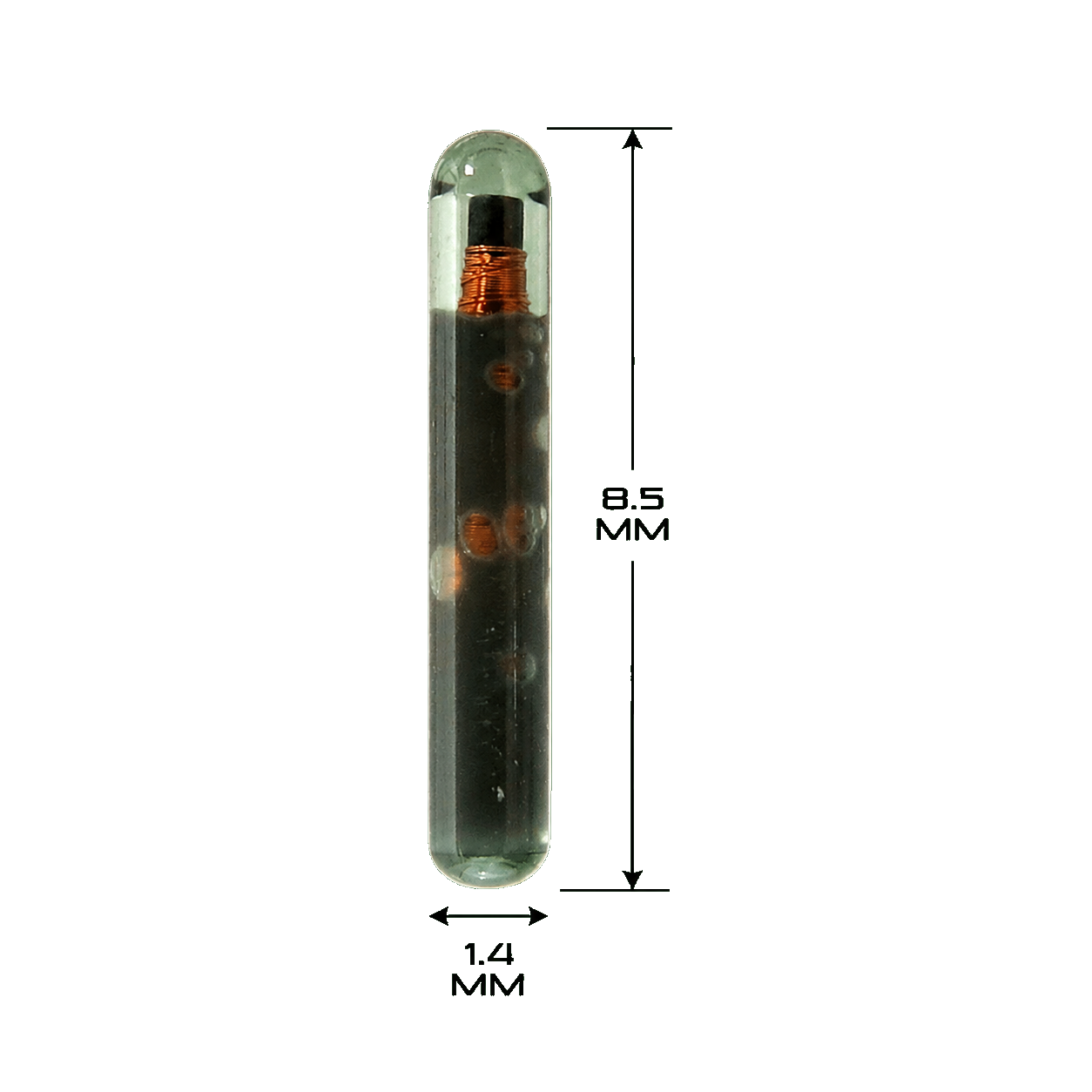
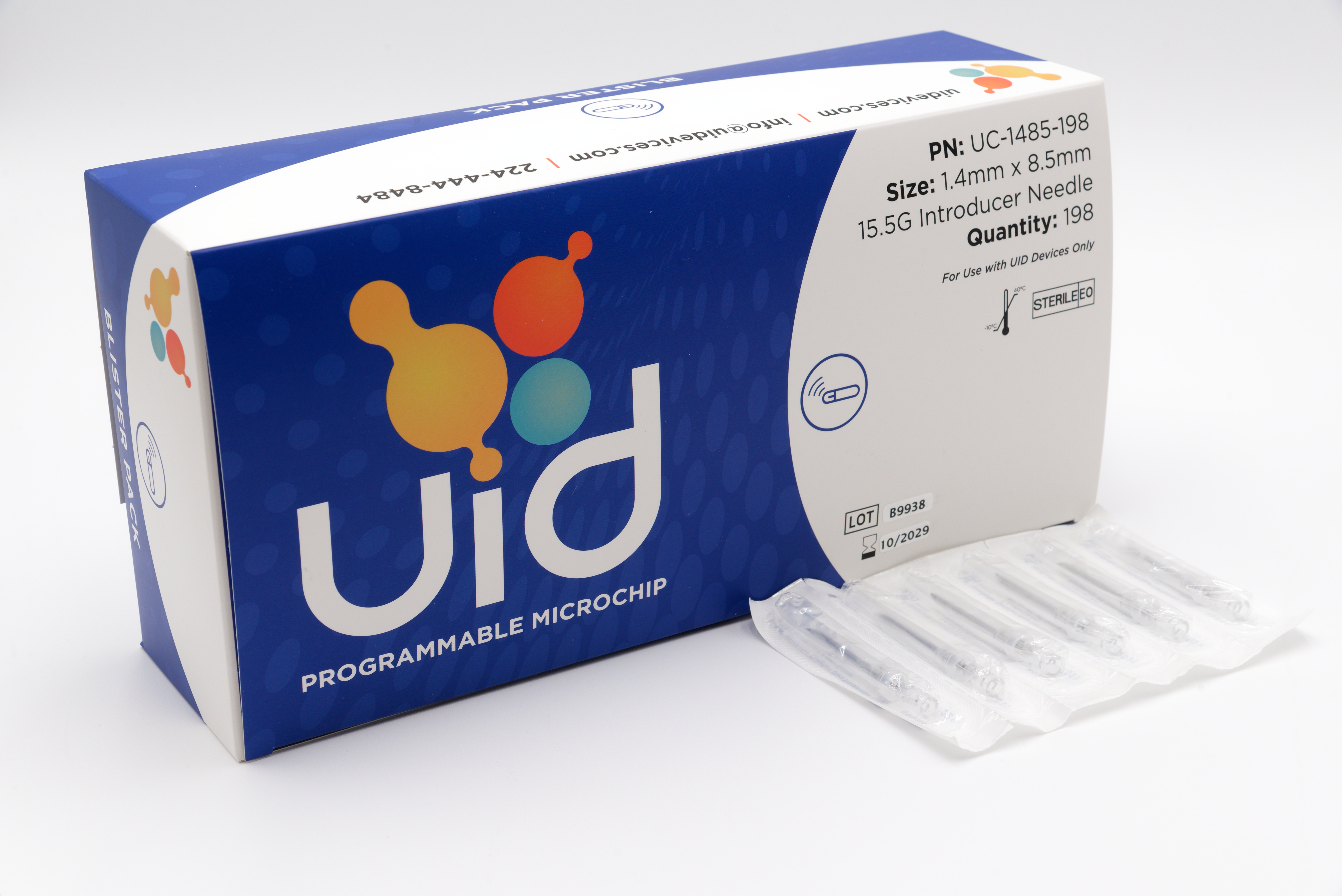
The UC-1485 is UID's general-purpose programmable microchip for standard mouse work. 1.4 mm × 8.5 mm, supplied in a sterile 15.5G cannula. It carries a unique ID alongside 16 alphanumeric characters of read/write memory you can program with study number, genotype, DOB, or any identifier you need to see at scan time.
- 1.4 × 8.5 mm
- 15.5G cannula
A Permanent ID that Travels with the Animal
Ear tags fall out in group housing. Notches get torn, smudged, or misread. Tattoos fade. For studies where a misidentified animal can invalidate a dataset, those failure modes are real costs.
The UC-1485 replaces all of that with a single passive implant. The unique ID cannot be lost or overwritten. The 16 characters of programmable on-board memory let you layer in human-readable context: study number, genotype, cohort, DOB. A tech scanning the animal sees both at once, without opening a database.
Program the chip before implantation via the UPS-60 Chip Provisioning station, or after implantation with the UBS-200L base station.
Specifications
Compare the Four Chips
| Capability | UC-1283 MiniMax | Current product: UC-1485 Mouse | UC-2112 All Species | UCT-2112 Temperature |
|---|---|---|---|---|
| Unique ID |  | | | |
| Temperature |  | | | |
| Programmable | | | | |
| Recommended for home-cage monitoring | | | | |
| Cannula gauge | 17G | 15.5G | 12.5G | 12.5G |
| Available in blister pack | | | | |
| Available in disposable injector | | | | |
Which Chip We'd Recommend, by Animal
| Species | UC-1283 | Current product: UC-1485 | UC-2112 | UCT-2112 |
|---|---|---|---|---|
| Neonate mice |  | | | |
| Mice | | | | |
| Rats | | | | |
| Guinea pigs, rabbits | | | | |
| Dogs, primates, larger species | | | | |
Order Microchips Pre-Programmed with Your Own IDs
Simplify your workflow with UID’s custom microchip programming service. We program each microchip with your unique alphanumeric ID (up to 16 characters), ensuring accuracy and consistency for your research or tracking needs.
- Send an Excel file — one row per chip, up to 16 alphanumeric characters each: study number, cohort code, genotype, or your own numbering scheme.
- Programmed in the sealed cannula — the same method our provisioning stations use, so sterility is never broken.
- Labeled to match — every package carries the data written on the chip inside, so the label and the scanner always agree.
You'll Likely Also Need
-
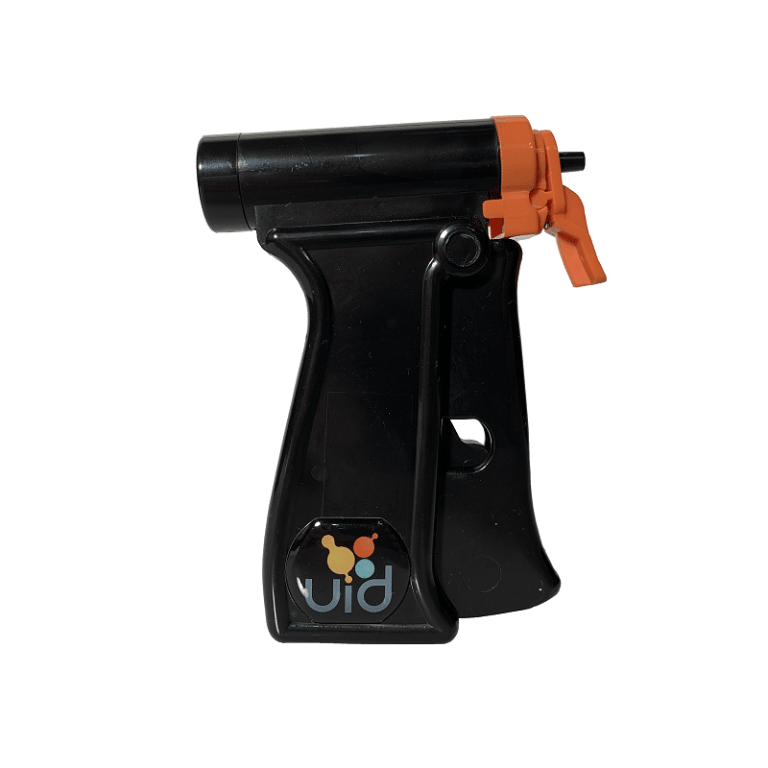 Pistol Grip Injector
UPGI-Q Pistol-Grip Microchip Injector
- Reusable
- Quick Eject
Reusable pistol-grip injector with ejector tab. Our most popular option for high volume implants. Compatible with all UID microchips except for the UC-1283 (MiniMax)
View UPGI-Q -
 Handheld reader
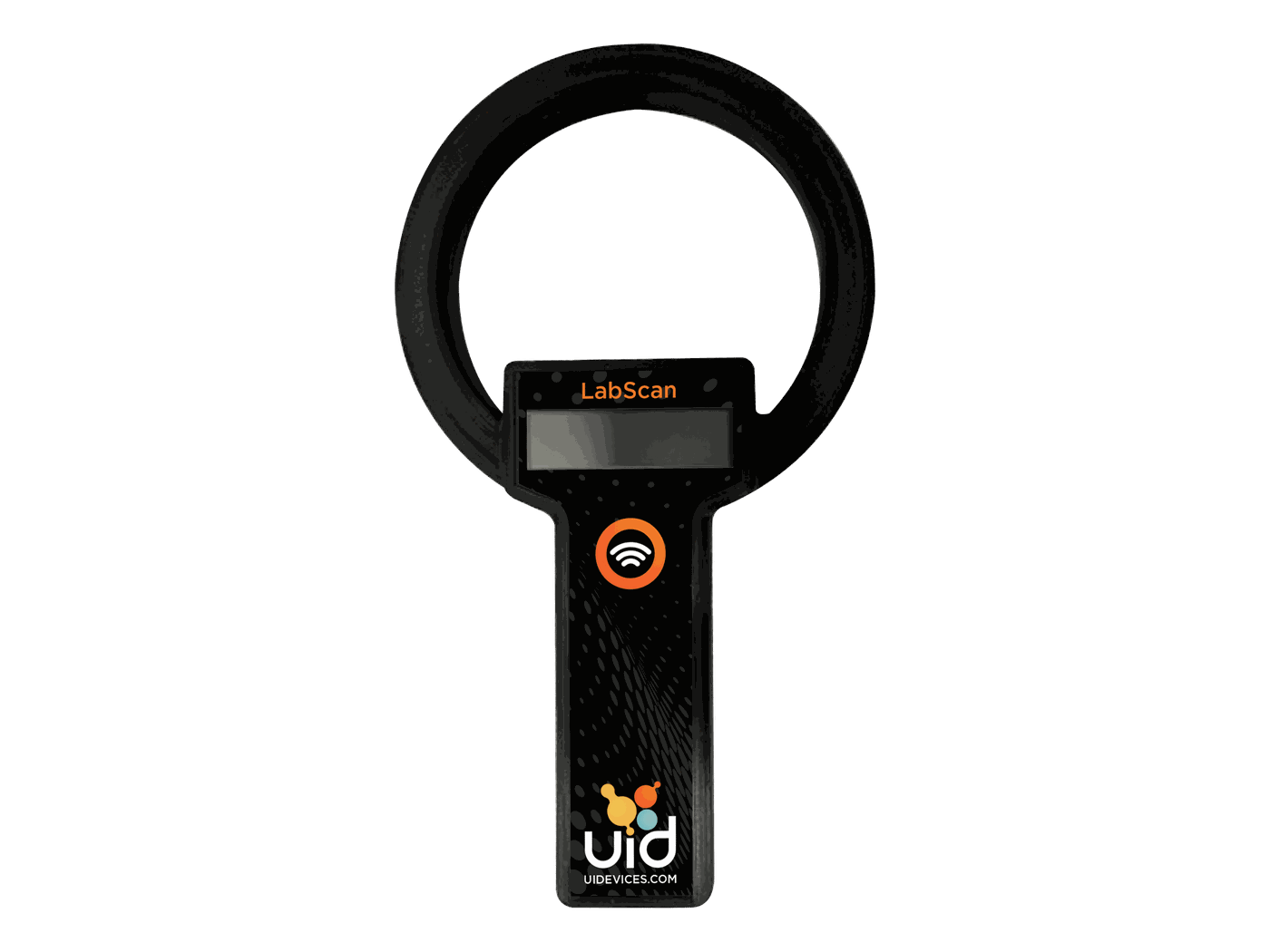
URH-2 Handheld Reader
- Small Animals
- 3" Read Range
Rechargeable handheld reader. Lightweight and easy to use with full LIMS compatibility.
View URH-2 -
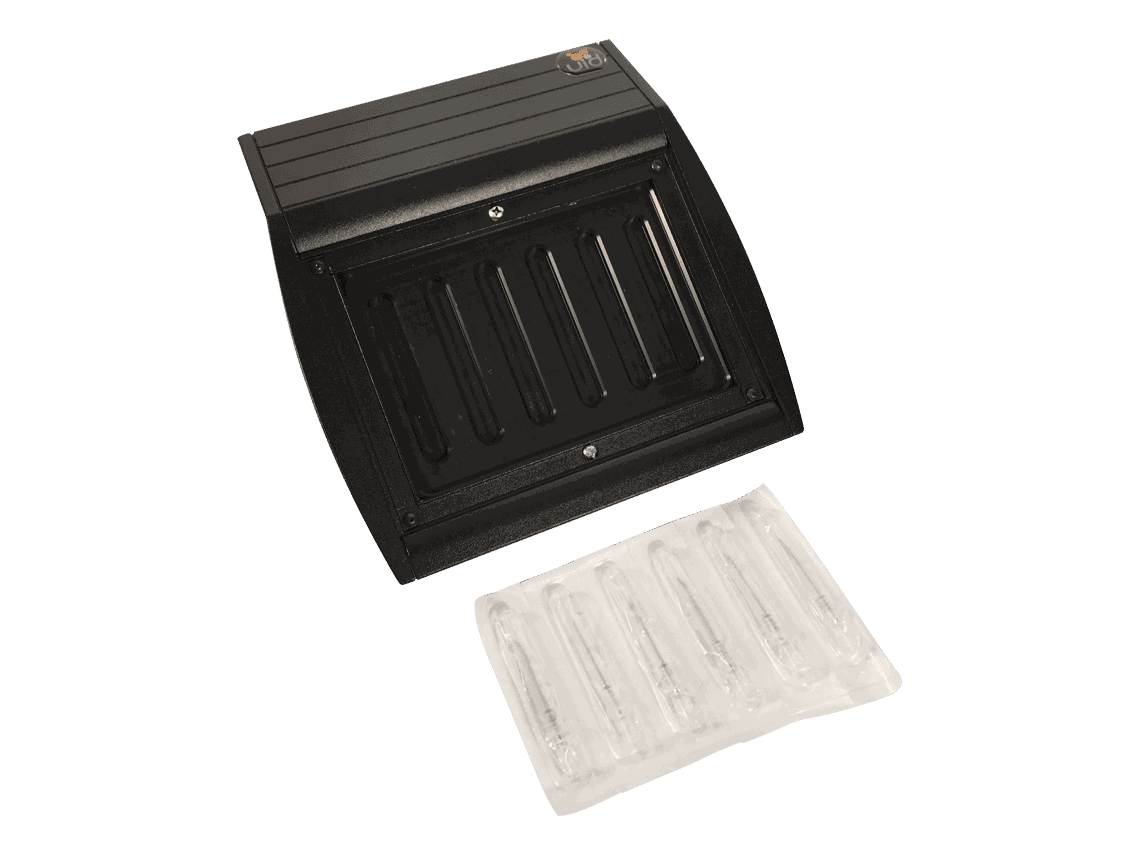 High Volume Provisioning
UPS-60 Provisioning Station
- Provisioning
- High volume
The UPS-60 is our high volume provisioning device. Program up to 6 RFIDs at once in the cannulas using PiSuite Provisioning Software.
View UPS-60
Common Questions
-
When should I use the UC-1485 vs. the MiniMax (UC-1283) or the UC-2112?
The UC-1485 is the right choice for standard adult mouse work. It is smaller than the UC-2112 (which targets rats and larger species) and uses a 15.5G cannula rather than the 17G on the MiniMax. Use the MiniMax when your animals are neonates (PND 10 or younger) or otherwise too small for a 15.5G implant. Switch to the UC-2112 for rats, guinea pigs, ferrets, rabbits, or any species where the 1.4 × 8.5 mm chip is undersized.
-
What is the difference between the unique ID and the programmable memory?
The unique ID is factory-set before the chip ships and cannot be altered. It is the animal's permanent identifier and is guaranteed to be non-repeating across UID's chip inventory. The 16 programmable characters are read/write memory you control. Most labs use the unique ID as the key in their LIMS and write human-readable context, like study number, DOB, and cohort, into the programmable field. Programmed information persists for the life of the animal and can only be changed through UID's programming software.
-
How are chips programmed in practice?
Before implantation, load cannulas into the UPS-60 Chip Provisioning Station and program up to six chips at once. After implantation, use the UBS-200L Microchip Reader Base Station to write to the programmable field while the chip is already in the animal. Either path writes to the same 16-character field.
-
Which readers are compatible with the UC-1485?
The UC-1485 is compatible with all UID readers.