
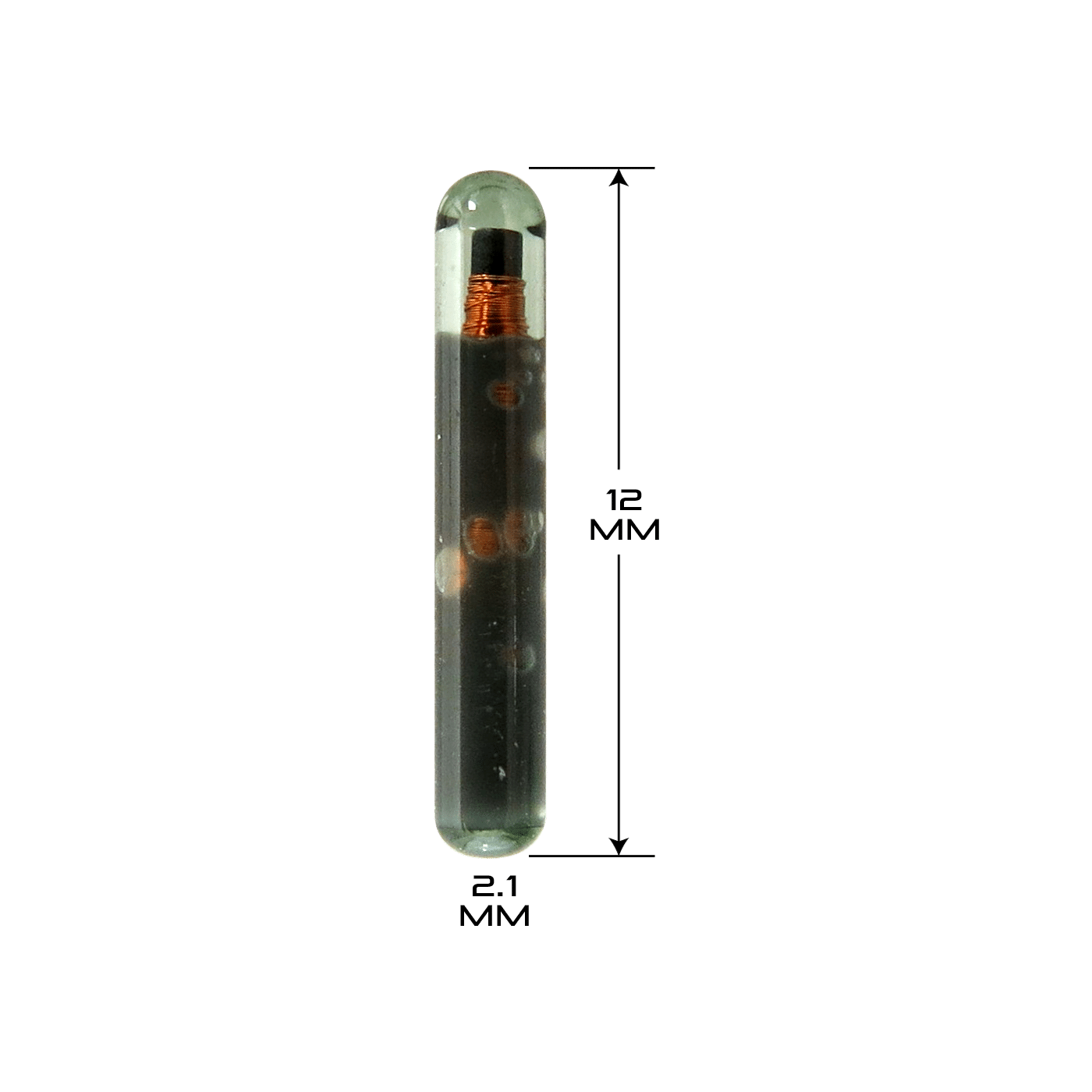
The short version
ISO 11784 and ISO 11785 are the two standards that govern radio-frequency identification (RFID) of animals. 11784 specifies the structure and content of the identification code itself. 11785 specifies the technical concept — how readers and transponders communicate, at what frequency, and under what protocol.
Together they are what makes a microchip “ISO compliant,” and they are why a chip implanted in 2008 in Belgium can still be read in 2026 in Wisconsin by a reader from a completely different vendor.
What 11784 actually requires
The identification code is 64 bits, structured as:
- Country code or ICAR manufacturer code (10 bits)
- National identification code (38 bits)
- Flags and reserved bits (16 bits, including the animal-application flag and the flag that signals an additional data block)
On paperwork you’ll see it as the familiar 15-digit number: a 3-digit country or manufacturer code followed by a 12-digit national code. Country codes follow ISO 3166; manufacturer codes are assigned and audited by ICAR, which is also the registration authority that certifies transponders.
If you’re a researcher, the practical thing to know is that the code is unique and permanent for the lifetime of the transponder, and uniqueness is administered for you — ICAR assigns each manufacturer its code space and holds manufacturers to it.
What 11785 actually requires
11785 sets the air interface: readers activate transponders at 134.2 kHz, and two protocols are defined:
- HDX (half-duplex) — the reader charges the transponder, pauses, and the transponder replies during the pause. Common in livestock ear tags and in-stream fisheries antennas.
- FDX-B (full-duplex B) — the transponder replies while the reader field is on. This is the dominant protocol in research, veterinary, and pet identification.
Most modern readers handle both. Most modern implants are FDX-B. Unless you have a specific reason to use HDX, default to FDX-B.
Conformance has its own standard: the ISO 24631 series defines how transponders and readers are tested against 11784/11785, and its first part was revised in 2025 (ISO 24631-1:2025), covering transponder conformance and how manufacturer codes are granted. ICAR runs that certification — if a vendor claims ISO compliance, an ICAR certification number is the evidence to ask for.
Where vendors differ even when both claim ISO compliance
ISO compliance is necessary but not sufficient. Two transponders can both be 11784/11785 compliant and behave differently in practice. Things to ask about:
- Read range under realistic conditions, not benchtop maximums. Bedding, cage geometry, and water bottles all attenuate.
- Migration rate — how often the implant moves from the injection site over the lifetime of the animal. Coating chemistry matters here.
- Failure rate inside the animal — failures happen. What’s the warranty?
- Sterilization process and packaging shelf life — EO sterilization is standard. Shelf life past 5 years is unusual; check your stock.
- Applicator design — a binding or jamming applicator wastes transponders and stresses the animal. Test before you commit to volume.
What we recommend asking before you order
A short list of questions for any vendor — including us:
- Show me read-range data with the cage type I’ll actually use.
- What’s the warranty if a transponder fails inside an animal?
- What’s the lead time on volume orders, and what’s the lead time today?
- Who do I call when something doesn’t work — and what’s their title?
If the answers are vague, the deployment will be too.
When this matters most
The standard becomes load-bearing the day someone else needs to read the chip. Auditors. Compliance officers. The veterinarian at the next facility. The graduate student in 2031 who picks up the longitudinal study you started. Pick a vendor whose chips will still be readable when you no longer work there.