
PIT tags built for the field — and the species in it.
Passive Integrated Transponder tags give every animal a unique, permanent ID that reads through water, tissue, and dense cover. UID makes FDX-B ISO PIT tags in two sizes, the injectors and cartridges that go with them, and the readers that pull the ID back. Pick the size that fits your species, the format that fits your protocol, and start tagging.
- FDX-B · 134.2 kHz
- ISO 11784/11785
- ICAR certified
An implantable ID that lasts the life of the animal.
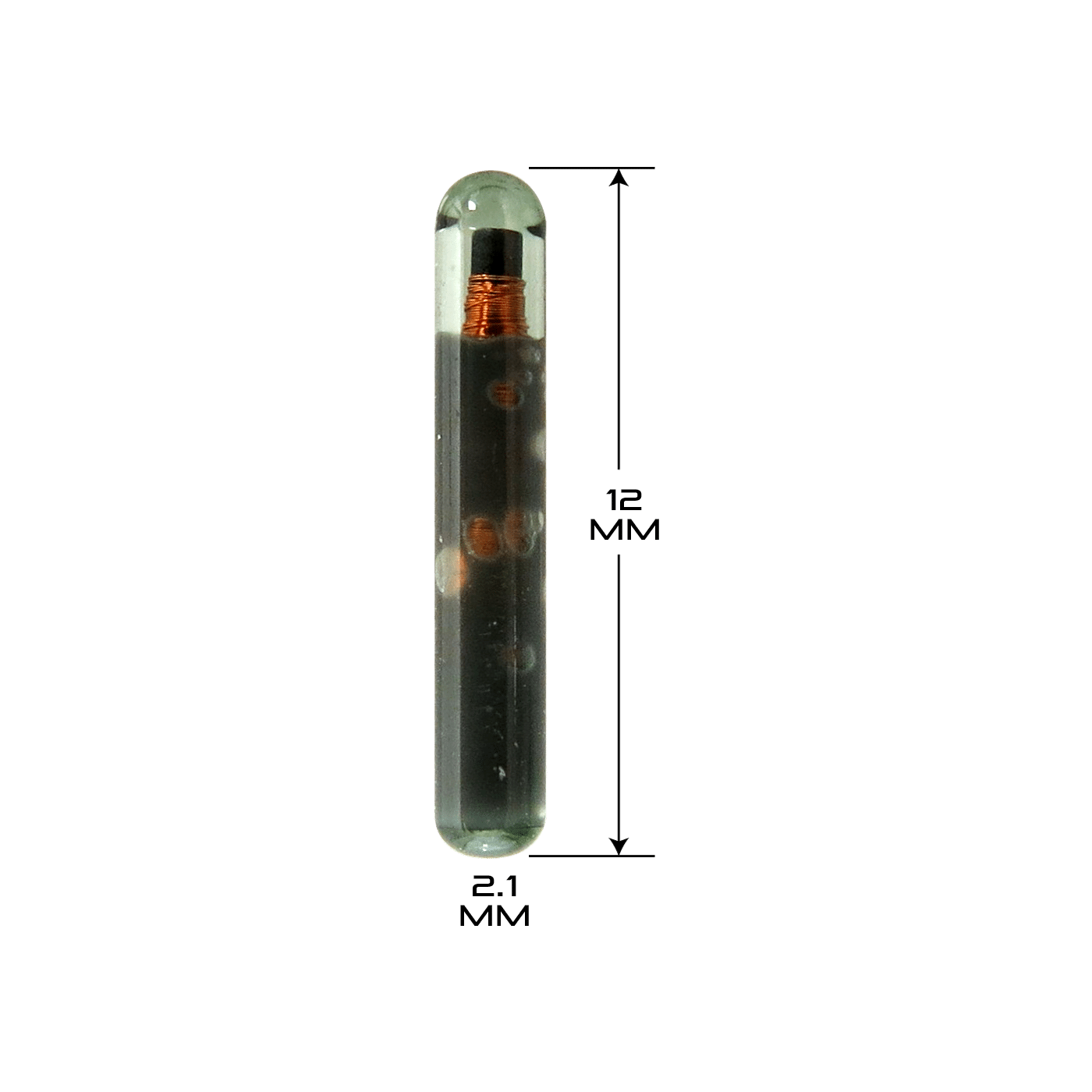
A PIT tag is a passive transponder about the size of a grain of rice, sealed in biocompatible glass. Implanted under the skin or in the body cavity, it carries a unique 128-bit identifier that never repeats and reads at 134.2 kHz — a low frequency that travels through water and tissue where higher frequencies are absorbed. There's no battery and no maintenance. UID's tags are built for a 15-plus-year service life, which is longer than most of the animals that carry them. The technology has been used in fisheries research since the mid-1980s, on species ranging from juvenile salmon and sturgeon to turtles, frogs, bats, and large mammals. The 2.1 × 12 mm format is the workhorse; the 1.4 × 8.5 mm format opens up species too small for a standard tag.
From tag selection to recorded read.
-
Pick the size
Choose 2.1 × 12 mm for the read-range and retention of a standard tag, or 1.4 × 8.5 mm — roughly a quarter the volume — for juvenile fish, small amphibians, and other species where a 12 mm tag isn't an option.
-
Load the injector
Tags ship in injection-ready cartridges. Drop a cartridge into a single-shot needle for sterile clinical work, or load a Multi PIT Tag Injector for high-throughput field tagging where you're moving fast.
-
Implant
Inject subcutaneously or intraperitoneally per your study protocol. The biocompatible glass capsule keeps the implant profile low; the passive design means no batteries and no maintenance.
-
Read
Pair the tags with an ISO 11784/11785 FDX-B reader — handheld for recapture sampling, antenna-mounted for in-stream or in-burrow detection. Every read returns the same unique ID, every time, for the life of the animal.
The PIT tag family
Tags, injectors, cartridges, and accessories — pick the pieces your study needs.
- Standard FDX-B
FDX PIT Tag — 2.1×12 mm
The workhorse FDX-B PIT tag — 2.1 mm × 12 mm, ISO 11784/11785 compliant, ICAR certified. The standard size for adult fish, small mammals, and most field studies.
View tag -
 Small-species FDX-B
FDX PIT Tag — 1.4×8.5 mm
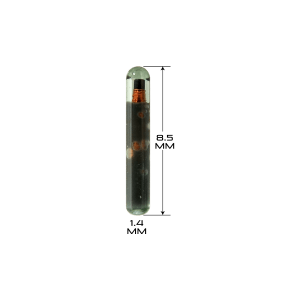
The smallest ISO-compliant FDX-B PIT tag UID offers. Biocompatible glass, 128-bit unique ID, 134.2 kHz — built for fish, amphibians, and small mammals.
View tag -
%22%3E%0A%20%20%20%20%20%20%3Crect%20width%3D%2228%22%20height%3D%2228%22%20fill%3D%22transparent%22%2F%3E%0A%20%20%20%20%20%20%3Cline%20x1%3D%220%22%20y1%3D%220%22%20x2%3D%220%22%20y2%3D%2228%22%20stroke%3D%22%234a9b3e%22%20stroke-width%3D%221.4%22%20stroke-opacity%3D%220.18%22%2F%3E%0A%20%20%20%20%3C%2Fpattern%3E%0A%20%20%20%20%3ClinearGradient%20id%3D%22wash%22%20x1%3D%220%22%20y1%3D%220%22%20x2%3D%221%22%20y2%3D%221%22%3E%0A%20%20%20%20%20%20%3Cstop%20offset%3D%220%25%22%20stop-color%3D%22%23f1f8ee%22%20stop-opacity%3D%221%22%2F%3E%0A%20%20%20%20%20%20%3Cstop%20offset%3D%22100%25%22%20stop-color%3D%22%23f1f8ee%22%20stop-opacity%3D%220.6%22%2F%3E%0A%20%20%20%20%3C%2FlinearGradient%3E%0A%20%20%3C%2Fdefs%3E%0A%20%20%3Crect%20width%3D%22100%25%22%20height%3D%22100%25%22%20fill%3D%22url(%23wash)%22%2F%3E%0A%20%20%3Crect%20width%3D%22100%25%22%20height%3D%22100%25%22%20fill%3D%22url(%23hatch)%22%2F%3E%0A%20%20%3Crect%20x%3D%2214%22%20y%3D%2214%22%20width%3D%22452%22%20height%3D%22332%22%20fill%3D%22none%22%20stroke%3D%22%234a9b3e%22%20stroke-width%3D%223%22%20stroke-dasharray%3D%2216%2012%22%20stroke-opacity%3D%220.55%22%2F%3E%0A%3C%2Fsvg%3E) Starter bundle
Starter bundlePIT Tagging Kit
Tags, injector, cartridges, and a handheld reader, bundled and paired for your species. The fastest way to start a PIT-tagging study from scratch.
View kit -
 High-throughput tagging
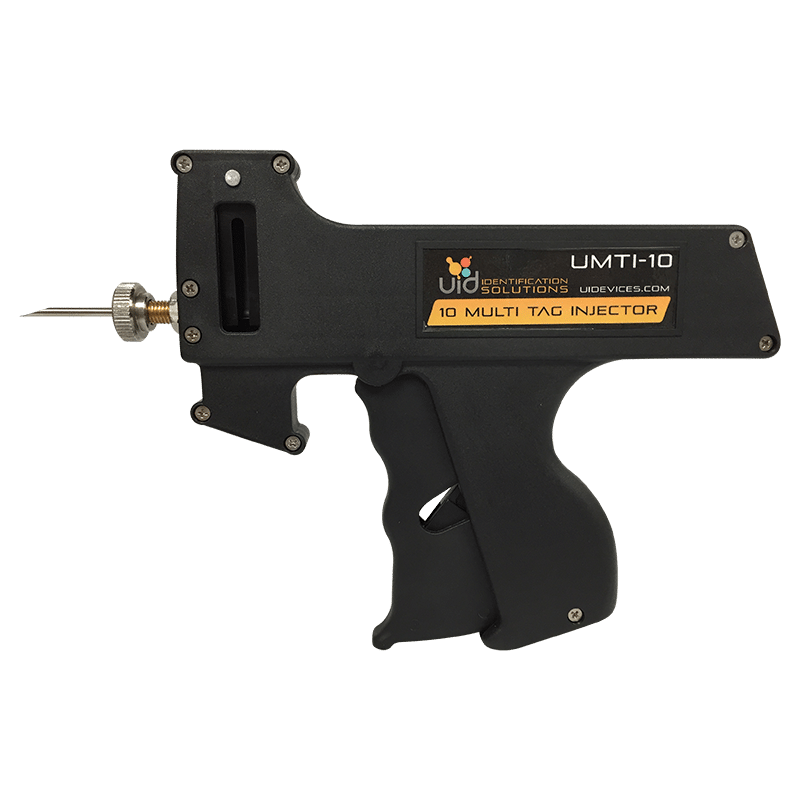
Multi PIT Tag Injector — UMTI-10
Ten 2.1×12 mm FDX-B PIT tags per cartridge, one trigger pull each. A reloadable, reusable field injector for high-throughput fish, wildlife, and herpetofauna tagging.
View injector -
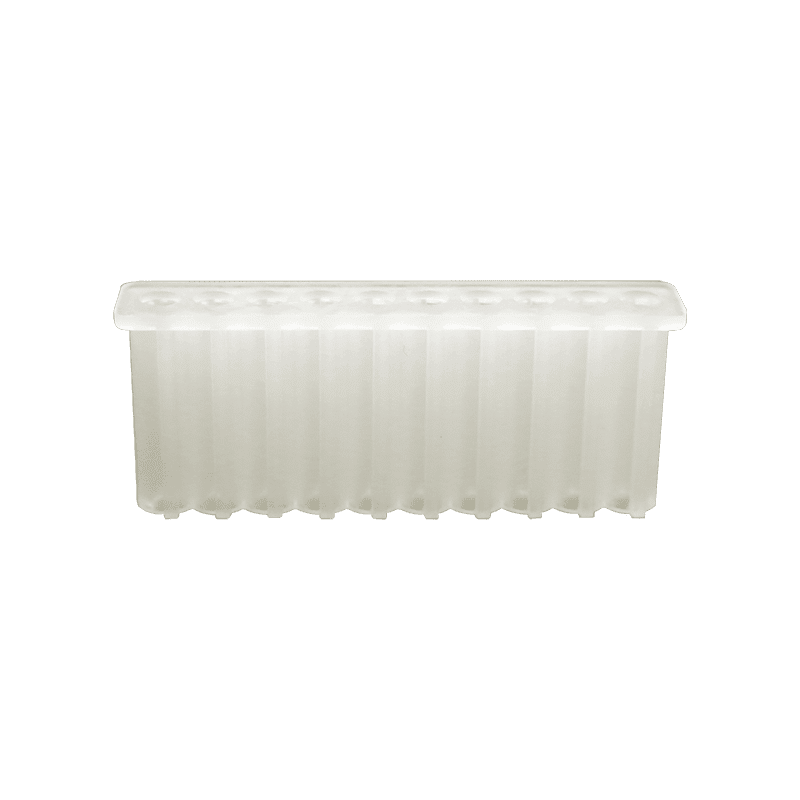 Consumable
Empty PIT Tag Cartridge
Empty cartridges for self-loading 2.1 × 12 mm FDX-B PIT tags into the Multi PIT Tag Injector. Each cartridge holds up to 10 tags. Sold in boxes of 10.
View cartridge -
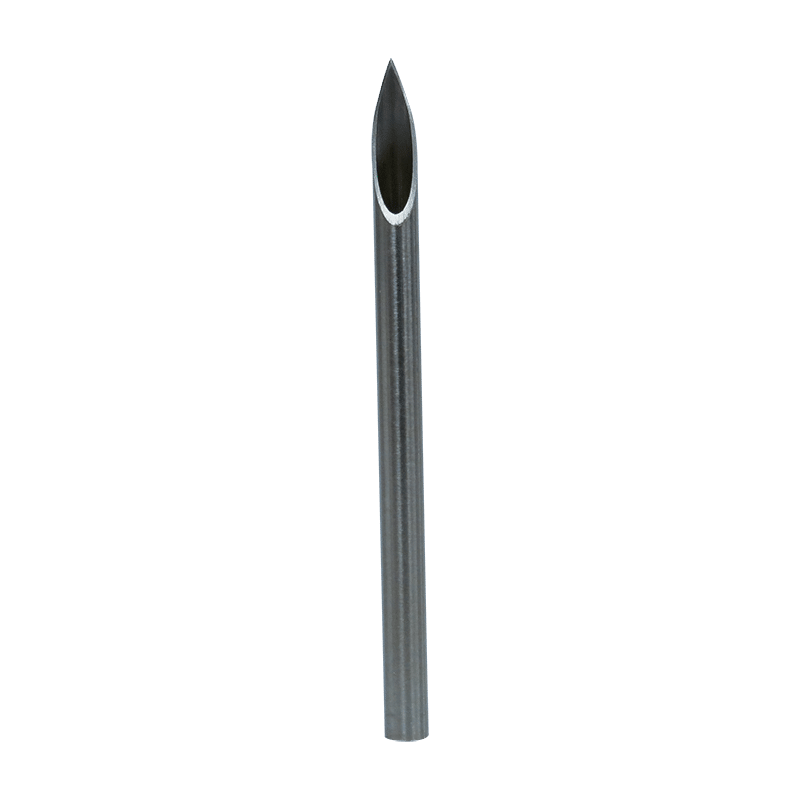 Consumable
PIT Tag Injector Needle
Replaceable triple-ground injection needle for the UMTI-10 Multi PIT Tag Injector. Built to ease insertion and minimize tissue trauma during microchip implantation. Box of 10.
View needle
Common questions
-
Which tag size should I use — 2.1 × 12 mm or 1.4 × 8.5 mm?
Use the 2.1 × 12 mm tag whenever the animal can carry it — it has a longer read range and is the standard across most fisheries and wildlife protocols. Step down to 1.4 × 8.5 mm when body mass or implant site won't accommodate a 12 mm tag: juvenile salmonids, small-bodied amphibians, shrews, lizards. The smaller tag is roughly a quarter of the volume; read range will be shorter, so plan antenna placement accordingly.
-
Are UID tags ISO compliant?
Yes. UID's FDX-B tags operate at 134.2 kHz and conform to ISO 11784 and 11785 — the standards that govern animal RFID identification. They're ICAR certified, and they read on any ISO-compliant FDX-B field reader, not just UID's.
-
How long does a PIT tag last?
The tags are passive — no battery — and built for a 15-plus-year service life. In practice that's longer than the lifespan of most species they're implanted in. The ID is hard-coded and never repeats.
-
What's the difference between FDX-B and HDX?
FDX-B (full duplex) and HDX (half duplex) are the two ISO-compliant low-frequency PIT tag protocols. UID's tags are FDX-B, which is the more common standard in fisheries and most wildlife studies. HDX is sometimes preferred for in-stream antenna arrays where longer read range matters more than tag size. If your study has already specified a protocol from existing infrastructure, match it; otherwise FDX-B is the default.
-
Do the tags ship sterile?
It depends on the format. Tags loaded in single-shot injector needles ship sterile and individually packaged — appropriate for clinical or surgical implantation. Tags in pre-loaded cartridges for the Multi PIT Tag Injector ship in non-sterile form, which is the right call for high-throughput field tagging where sterility isn't the limiting factor. Confirm packaging with us when you order.
-
Which reader do I pair with these tags?
Two UID field readers cover most programs. The URH-2 is the in-hand handheld for recapture and point-of-capture scanning at close range. The URH-300HP reads FDX-B and HDX at 6–8 in and is rated IP67 — the dual-protocol reach most North American salmonid PIT-tag programs need — and pairs with the URH-PLEX antenna for underwater scanning. See the full lineup on readers, injectors, and accessories.
Need help picking the right size, injector, or reader?
Study design drives tag choice — body size, recapture method, whether you're scanning by hand or with a fixed antenna. If you're building a tagging program from scratch or migrating from another vendor, we can help you scope it before you order.