
The number of times I have heard that one deserves its own form of a swear jar.
Every veterinary professional has done this at some point. In good faith, of course.
You write a drug amount down on a piece of paper and make that undeniably flighty mental note that you will absolutely not lose it or forget to transcribe it into your paper log or digital log later.
Let’s be honest here, before the contents of that sticky note make it into your log, or even the patient’s chart for you to refer to later when you absolutely, positively will remember to transcribe it into your log, you will put your hands on at least three more patients, be asked a minimum of a dozen client questions you could have sworn you answered before, and a tech will probably ask you to pat that wiggly, overly enthusiastic Lab that came in for extreme lethargy on the head while they attempt to collect a blood sample.
And then, like clockwork, instead of your mind settling down on your drive home from the clinic, you will inevitably remember that you forgot to enter that log.
You will make a mental note to do it tomorrow and hope that the stars align, it’s not a full moon, and Mercury isn’t in retrograde when you finally “get to it.”
Your DEA Registration Is Worth More Than a Coin Flip
Nobody wants to think about it this way, but when that fateful missing log entry becomes an inventory discrepancy during a DEA audit, it can cost a substantial amount of money, not to mention the priceless gray hairs and the nerves shredded in the process.
Your Sanity Is Worth More Than a Coin Flip
That paper log, hopefully in a composed, commercially available spiral notebook rather than hole-punched paper that will inevitably tear and slide under a cabinet, relies on you having the time and brainspace to log the use event before you’ve put the bottle back in the safe.
That digital log, hopefully not in Apple Numbers or Microsoft Excel but rather utilizing a secure platform with appropriate security features, relies on you having the time and brainspace to log the use event before you’ve put the bottle back in the safe.
Either way, the system works right up until reality gets in the way.
Your Quality of Care Deserves More Than a Coin Flip
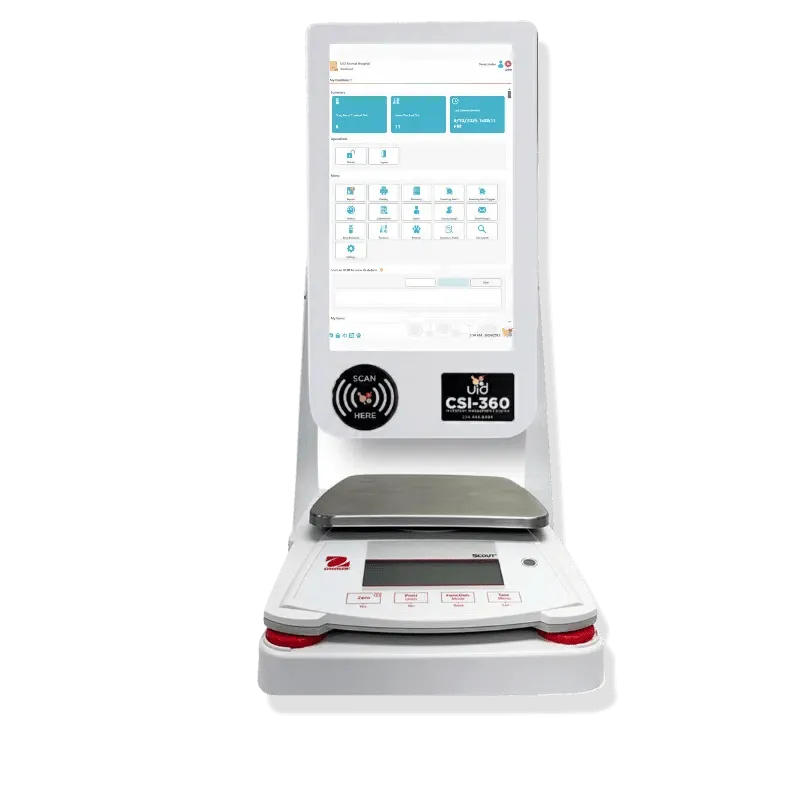
That’s where CSI-360 comes in.
Yes, yes, you knew I was going to go there.
But you were undeniably entertained by how we got here nonetheless.
So allow me to tell you that you can document those transactions as part of returning the drug back into the safe, because with CSI-360, documentation becomes part of the workflow itself. The system ties together the user, the bottle, patient information, and usage data into an electronic record as part of the transaction process. The bottle is identified through RFID technology, and the system uses weight measurements and transaction data to help document usage and create an audit trail.
So your sticky note that grew wings and embarked on the adventure of a lifetime doesn’t need to even exist.
Logging Is Rarely Simpler Than This
- Log in. Log into the system by scanning your RFID fob and entering your PIN.
- Scan. Scan the drug bottle via its own RFID tag that’s right on the bottle.
- Weigh. Set the bottle on the scale.
- Add the patient. Enter or select patient information.
- Complete the transaction. Check the bottle back in. The record is automatically saved as part of the workflow.
- No more printing your log template from your clinic’s Google Drive because the last one ran out of space.
- No more splitting your digital log between two bottles and entering everything manually.
- No more trying to remember tomorrow what happened today.
Just log in, scan, weigh, enter your patient information, tap the screen, return to the cabinet and close the safe.
About the Author
Weronika Shore, CVT, is a veterinary products specialist at Unified Information Devices. A certified veterinary technician with more than 12 years of experience in small animal and exotics practices, she has worked across reception, technician workflows, and practice management. She is passionate about the human–animal bond and using technology to improve efficiency, accuracy, and compliance in veterinary medicine.