
Find the Pattern Before More Medication Goes Missing
Drug diversion is often discovered through routine records: a late entry, an unexplained balance, or repeated waste adjustments. A consistent process helps the facility investigate early, protect its people and research, and meet reporting requirements when a theft or significant loss occurs.
- Individual Sign-In
- Weighed Transactions
- Reviewable History
Federal Theft and Significant-Loss Reporting
- 1 business day Deadline for written notice to the local DEA Field Division after discovery
- 45 days Deadline for filing a complete and accurate DEA Form 106 electronically
- No fixed cutoff Significance is assessed using the factors in 21 CFR 1301.76(b), not one numeric threshold
Review the Record Before Drawing a Conclusion
The strongest signal is a pattern across inventory, transactions, and access. One discrepancy or behavior is not proof of diversion.
-
Inventory Records
- Balance differences — Physical stock does not match the running balance.
- Late or corrected entries — Transactions are added or changed after the work was performed.
- Repeated waste adjustments — Waste, returns, or overfill corrections cluster around the same item, study, user, or time.
- Small recurring variances — Individually minor differences form a pattern over several counts.
-
Cabinet Access
- Access outside expected duties — Cabinet openings do not line up with the user's schedule, protocol, or assigned work.
- Missing transaction context — Access has no matching animal, study, item, or note.
- Shared credentials — The facility cannot determine who actually opened the cabinet.
- Missing second approval — A transaction that requires two people has only one recorded user.
-
Staff Safety and Support
Changes in performance, concentration, attendance, or access patterns can have many causes and do not establish diversion on their own.
Document objective work-related facts, follow established safety, HR, security, and institutional procedures, and protect confidentiality. Do not diagnose or accuse someone based on a behavior alone.
Respond to Theft or Significant Loss
-
Secure the Area and Preserve the Record
Restrict access, count the affected stock, and preserve transaction, study, and access history before correcting any entries.
-
Document What Is Known
Record the drug, strength, dosage form, quantity, discovery time, people with access, and related transactions or protocols. Separate confirmed facts from open questions.
-
Notify the DEA Within One Business Day
The registrant must notify the local DEA Field Division in writing within one business day of discovering a theft or significant loss. This initial notice does not wait for the full investigation.
-
File DEA Form 106 Within 45 Days
Submit a complete and accurate Form 106 electronically through the DEA's secure reporting system within 45 calendar days of discovery.
-
Complete Other Required Reports
For theft, contact local law enforcement. Check state controlled-substance rules and institutional requirements, follow the facility's response plan, and document the control changes made afterward.
Connect Access, Measurement, and Review
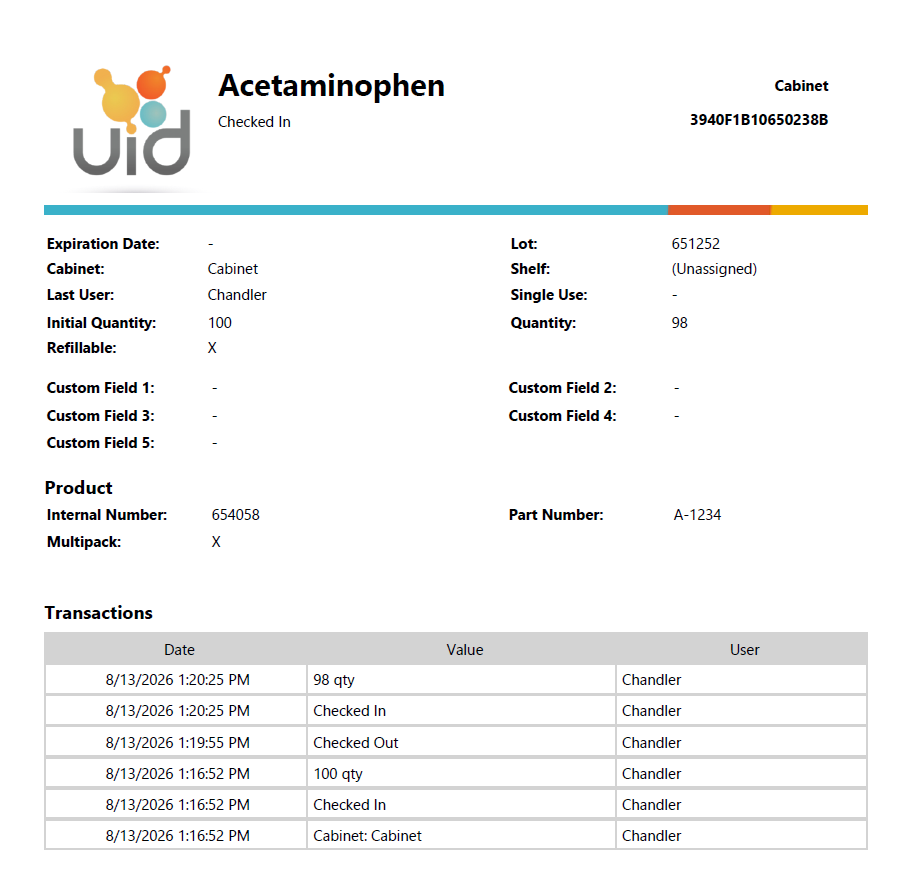
Physical security is one layer. A prevention program also needs a record that identifies the user, the item, the measured amount, the animal and study context, and the time.
CSI-360 brings those parts into the cabinet workflow:
- Individual access — An RFID badge, card, fob, or wristband plus a PIN identifies the person opening the cabinet.
- Two-person approval — Multi User Authentication can require a second approved user when the facility's policy calls for one.
- Measured transactions — Before-and-after weights and the drug's density calculate the amount removed from the container.
- Reviewable history — Inventory, activity, animal, and user-access reports keep transaction details together for review, while study details remain associated with the underlying records.
CSI-360 supports the facility's controls; the DEA registrant remains responsible for policies, investigation, and reporting.
More for Your Research Program
Start with CSI-360 for controlled-substance access and records, then explore readers for routine and higher-power animal identification.
-
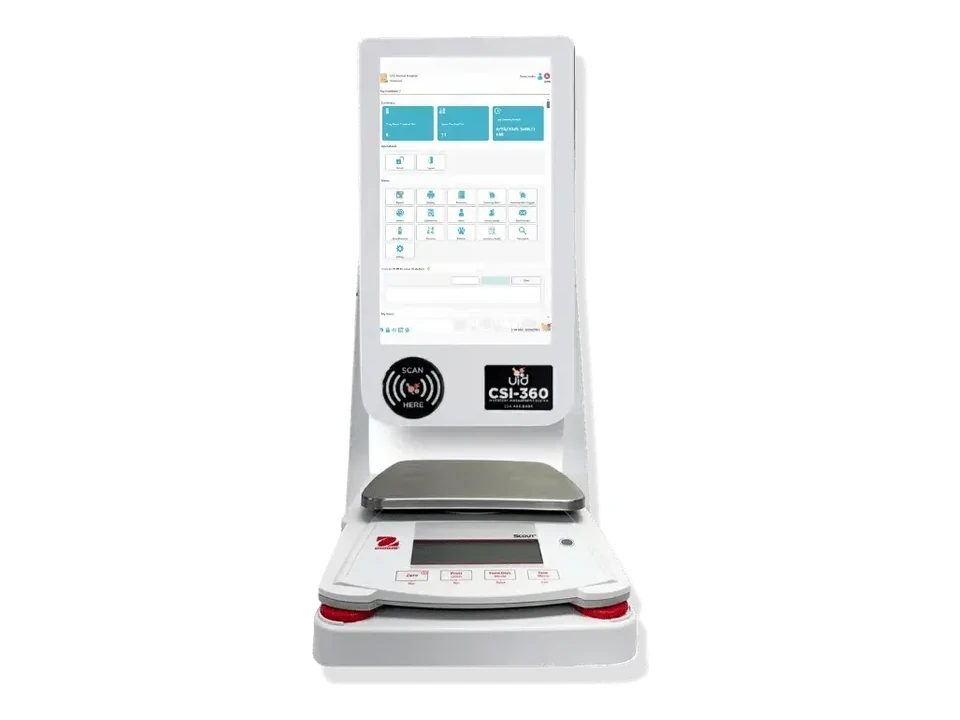 Controlled substance inventory
CSI-360 Controlled Substance Inventory Cabinet
- DEA audit-ready
- RFID access
- Biennial inventory
Automated controlled-substance cabinet for DEA-registered vivariums. RFID access, weight tracking, audit-ready reports.
View CSI-360 -
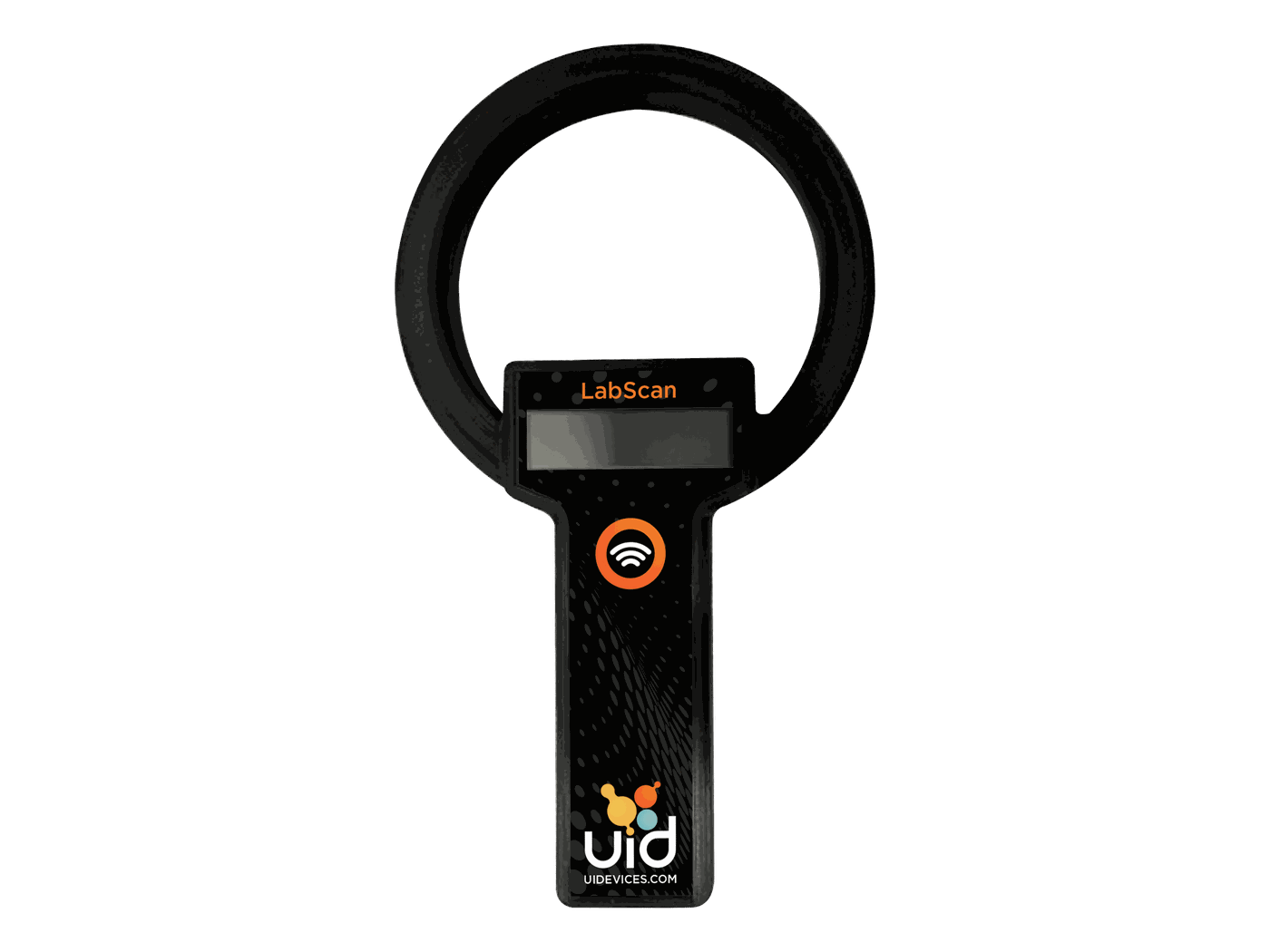 Handheld Reader
URH-2 Handheld Reader
- Small Animals
- 3" Read Range
Rechargeable handheld reader. Lightweight and easy to use with full LIMS compatibility.
View URH-2 -
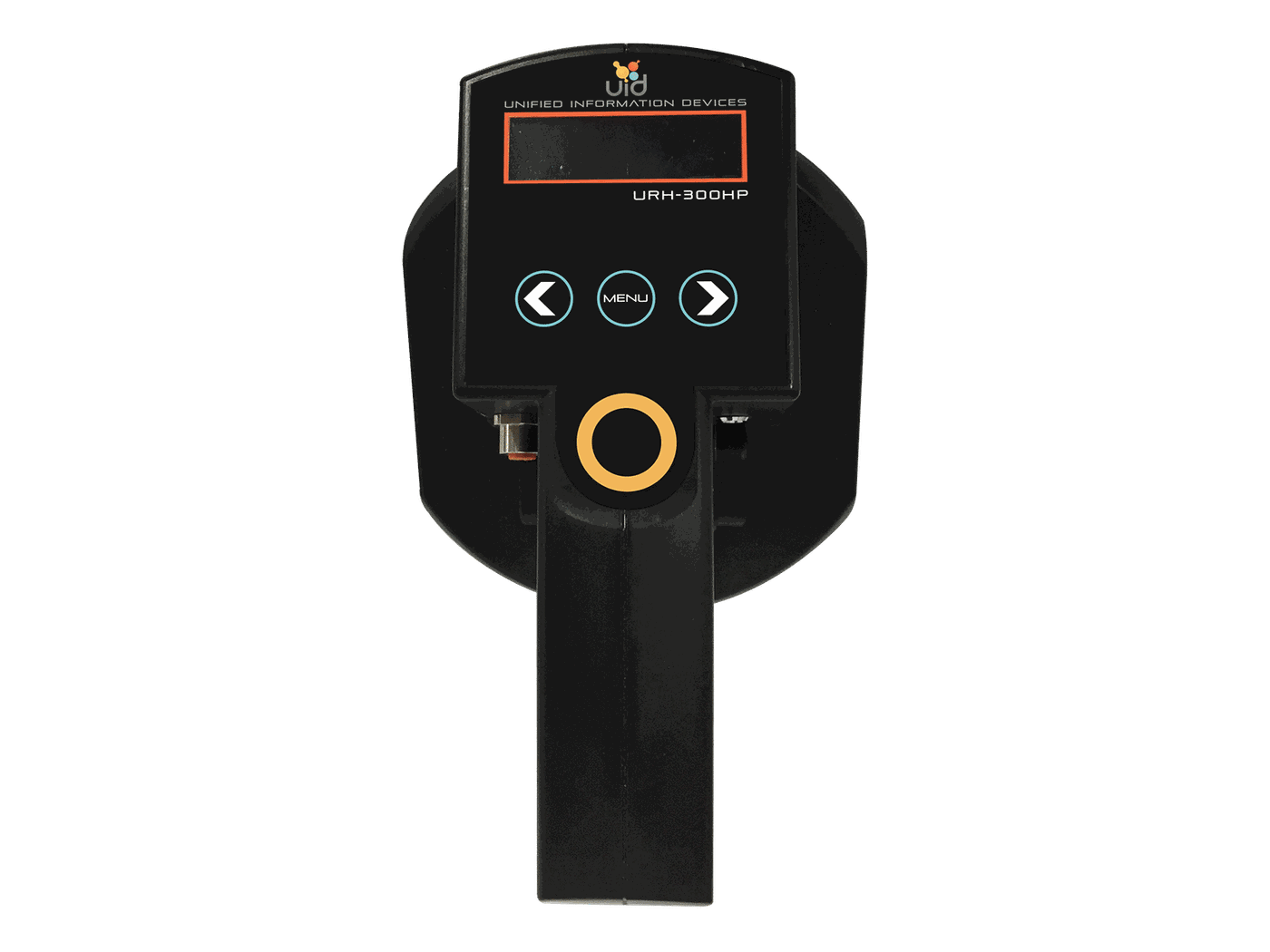 High-Power Reader
URH-300HP High Power Reader
- Large Animal
- 6"–8" Read Range
Long-range handheld reader. Optimized for large animals and harsh environments.
View URH-300HP
Common Questions
-
Is a locked cabinet enough?
A securely locked, substantially constructed cabinet addresses the federal storage requirements for researchers in 21 CFR 1301.75(a) and (b). An effective diversion-control process also limits access, identifies each user, records transactions, and reviews variances. State and institutional rules may add requirements.
-
What counts as a "significant loss"?
The DEA does not set one numeric threshold. Under 21 CFR 1301.76(b), the registrant considers the quantity and substance involved, access by specific people, patterns over time, investigation results, diversion potential, and local trends. Document the assessment instead of relying on the size of the discrepancy alone.
-
Do we file DEA Form 106 for every shortage?
No. DEA Form 106 is for theft or significant loss, and the DEA reporting portal says not to use it to correct minor inventory shortages. Every discrepancy should still be documented and investigated. Apply the factors in 21 CFR 1301.76(b), check state requirements, and contact the local DEA Field Division when the classification is unclear.
-
How should we respond if a staff member may be involved?
Start with safety and objective records. Preserve inventory, transaction, study, and access data; follow the facility's security and HR procedures; involve designated leadership; and protect confidentiality. A behavioral change alone is not proof of diversion and should not be treated as a diagnosis or accusation.
-
How does the CSI-360 help?
CSI-360 records individual sign-in, RFID-identified items, weighed transactions, and user-access history in one system. It helps the facility review discrepancies sooner, but it does not determine intent or replace the registrant's responsibilities. See the CSI-360 product page, DEA Audit Readiness, and Syringe Accuracy for related details.
References
- Locked-cabinet requirements for Schedule I and Schedule II–V controlled substances — 21 CFR 1301.75(a) and (b).
- Effective-controls requirement — 21 CFR 1301.71.
- Significant-loss factors and one-business-day notice — 21 CFR 1301.76.
- Electronic Form 106 and the 45-day deadline — 2023 DEA final rule.
- Practitioner compliance resources — DEA Diversion Control Division.
- Electronic theft and loss reporting — DEA Theft Loss Reporting.
Strengthen the Record Behind Every Dispense
Tell us how controlled substances are stored and logged today. We'll show you how CSI-360 fits the cabinet and your research team's workflow.