
Small Draws Magnify Syringe Tolerance
A 0.5 mL measurement in a 5 mL syringe carries an ISO-based tolerance of ±0.08 mL. Across a multidose vial, small differences between the syringe reading and the amount removed can make a research facility's controlled-drug record harder to reconcile.
- Partial-Volume Tolerance
- Before-and-After Weighing
- Current Dispense Records
Why Small Draws Require More Care
- ±0.08 mL ISO-based tolerance for a 0.5 mL draw volume from a 5 mL syringe
- 1.4%–18.6% Mean error range observed across small-volume measurements in a published syringe study
- <20% Share of labeled syringe capacity associated with a greater likelihood of error above 5% in that study
Why Small Draws Are Harder to Reconcile
A syringe can be appropriate for preparing and administering a protocol dose while still being an incomplete tool for inventory accounting. Below half of nominal capacity, the ISO tolerance calculation includes a component based on the syringe's full capacity. That component becomes a larger percentage of a small draw.
The cited study tested commercially available syringes by drawing sterile water in a sterile-product-preparation setting; it did not test animal research dosing directly. Its measurement findings are relevant when a research team uses comparable syringes at similarly small fractions of labeled capacity.
- Syringe size matters — a small measurement occupies more of a smaller syringe, which generally makes it easier to read and reduces relative tolerance.
- Technique matters — plunger position and graduation spacing can affect a small-volume measurement, while needle gauge and length affect hub loss.
- The syringe and vial answer different questions — the syringe shows the prepared volume; inventory reconciliation asks how much left the container.
- Hub loss affects the inventory record — medication left behind in the needle hub came out of the vial even if it was not administered to the animal.
- Small differences accumulate — across repeated draws from a multidose vial, the recorded balance can move away from the physical balance.
A difference does not, by itself, mean someone prepared the dose incorrectly. It means the research facility needs a separate, defensible way to measure inventory movement. Dosing should continue to follow the approved protocol, the veterinarian's direction when applicable, the medication instructions, and the facility's procedures.
Four Simple Steps
Each transaction follows the same simple process
-
Log into the Cabinet
CSI-360 uses two-part authentication to control the electronic lock. Each cabinet entry is timestamped and logged to the user(s) performing the transaction.
-
Scan the RFID Label
Each drug vial or tracked item has its own RFID label. Scanning it identifies the item being checked out or returned.
-
Record the Amount Used
The user weighs the vial or manually enters the amount used. CSI-360 records the in-and-out quantity, amount remaining, and which animal and study received the dose.
-
Close the Cabinet
Close the cabinet and all of the transaction data is automatically saved. This takes a typical tech about ~20 seconds.
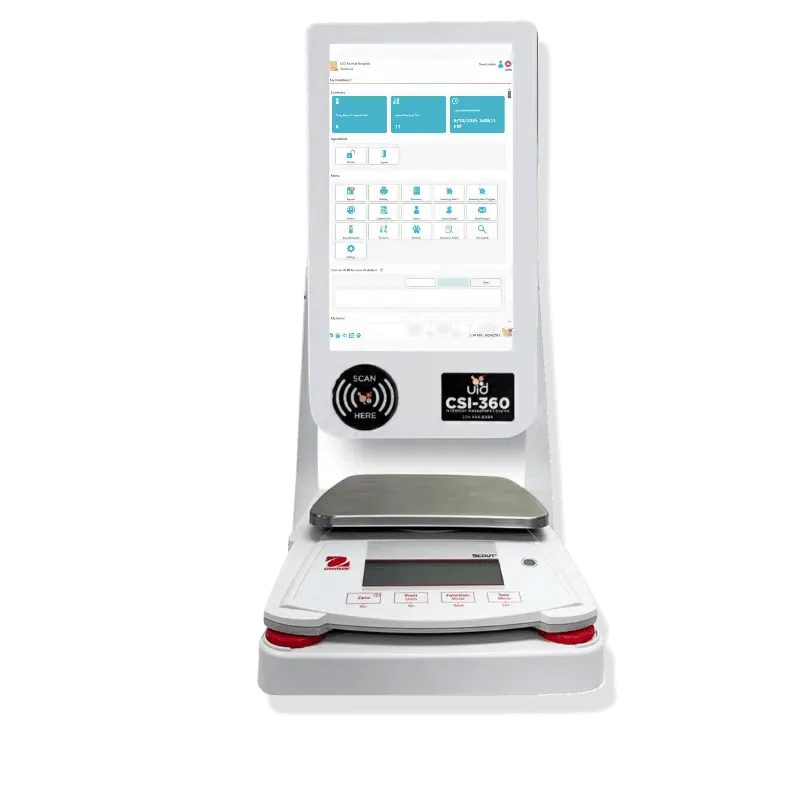
How CSI-360 Records a Measured Dispense
CSI-360 separates dose administration from inventory measurement. Research staff still choose the syringe and follow the technique required by the protocol and facility procedure; the system tracks how much inventory left the container.
- Container-based measurement — the inventory record comes from the before-and-after weight, not only the syringe marking.
- Hub loss is reflected in inventory — medication removed from the vial is part of the measured change, including liquid left behind in the needle hub.
- One current transaction — the measured amount stays with the user, animal, study, item, notes, and time.
- Facility procedures still apply — dose verification, waste documentation, physical inventory, and required DEA records remain the registrant's responsibility.
Syringe Reading vs. Container Weighing
| Measurement | Syringe Reading | Current product: CSI-360 Weighing |
|---|---|---|
| Primary Input | Plunger position at a syringe marking | Change in container weight |
| Small Draws | Relative error can increase as less of the syringe capacity is used | Inventory measurement does not rely on the syringe graduation |
| Hub Loss | Not included in the administered volume | Reflected in the amount removed from the container |
| Record Entry | Entered by research staff | Saved with the transaction |
| Reconciliation | Compared with physical inventory later | Measured dispense updates the running record |
More for Your Research Program
Pair controlled-substance inventory with RFID readers for routine animal identification and study workflows.
-
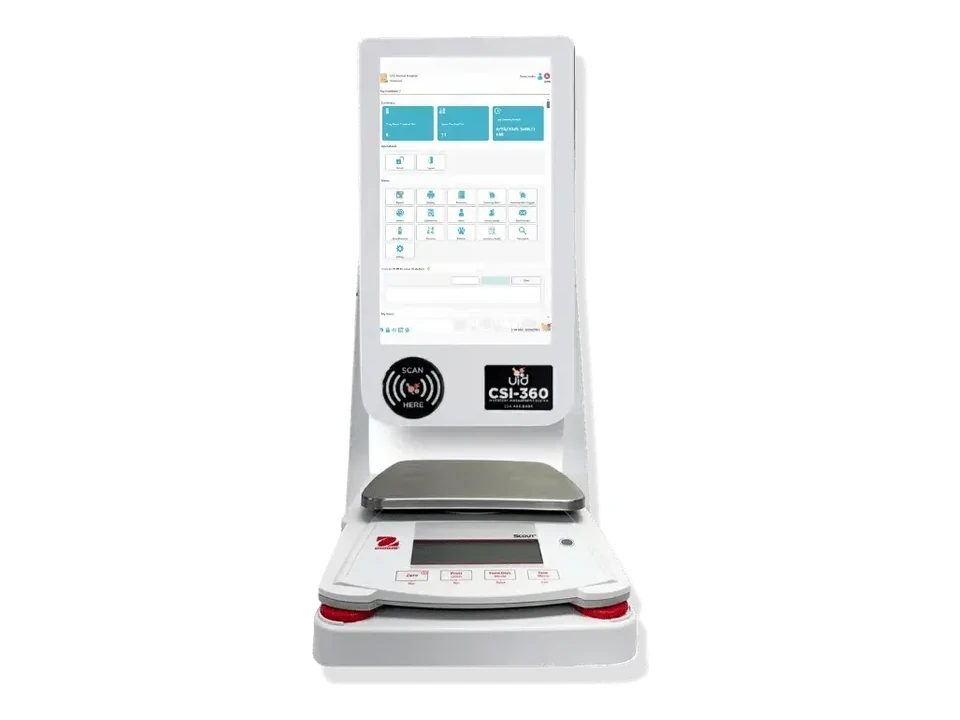 Controlled substance inventory
CSI-360 Controlled Substance Inventory Cabinet
- DEA audit-ready
- RFID access
- Biennial inventory
Automated controlled-substance cabinet for DEA-registered vivariums. RFID access, weight tracking, audit-ready reports.
View CSI-360 -
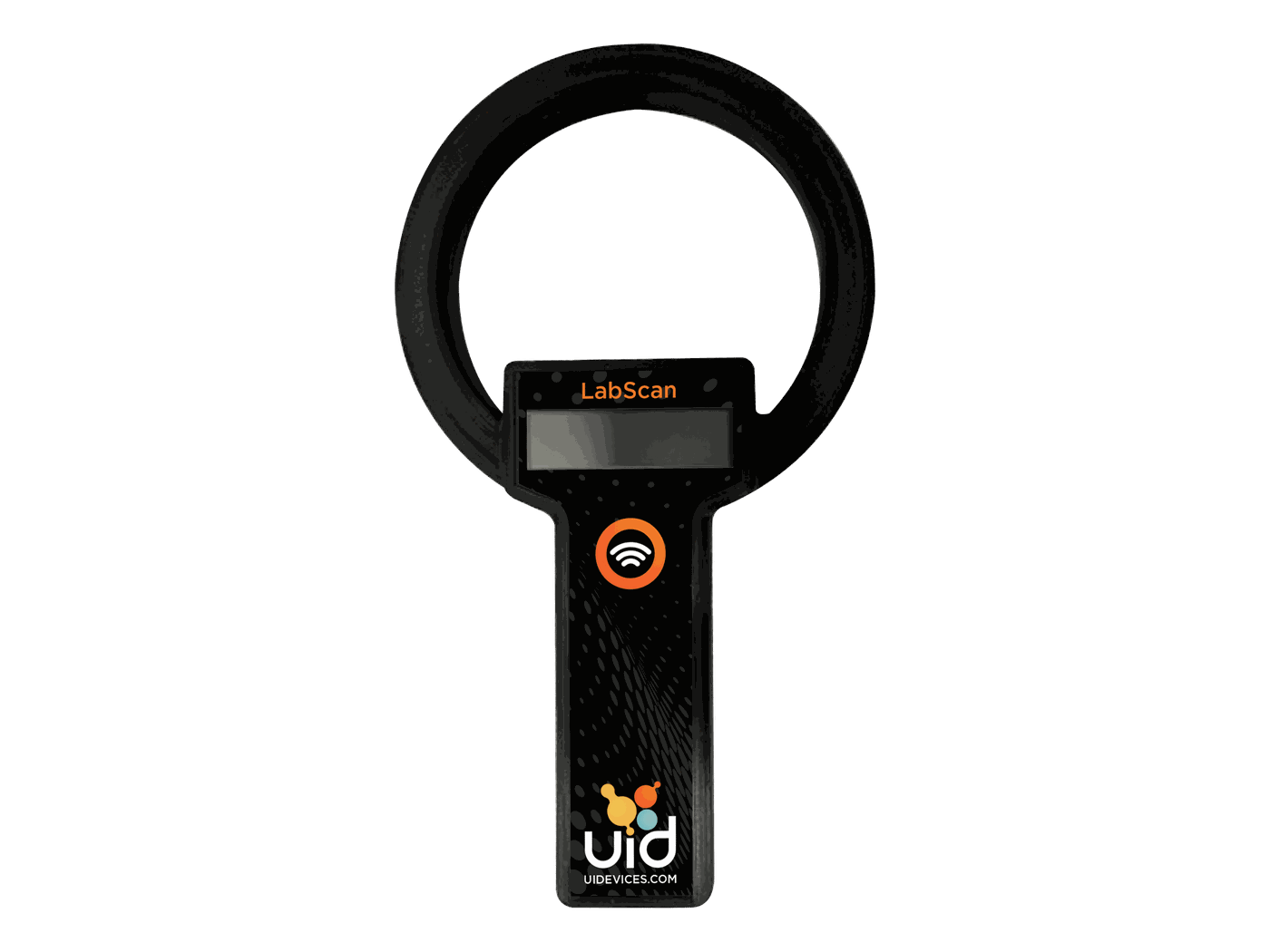 Handheld Reader
URH-2 Handheld Reader
- Small Animals
- 3" Read Range
Rechargeable handheld reader. Lightweight and easy to use with full LIMS compatibility.
View URH-2 -
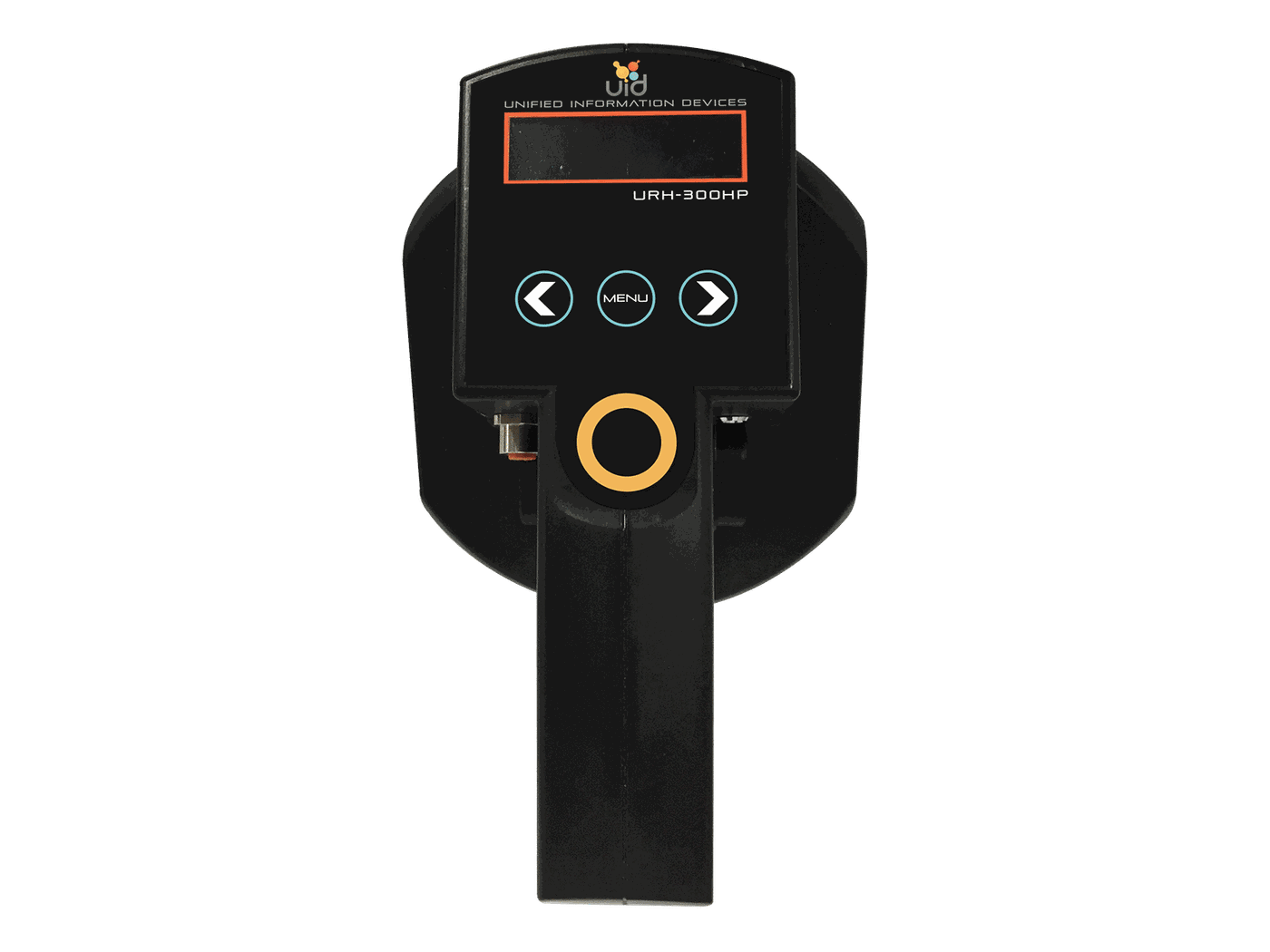 High-Power Reader
URH-300HP High Power Reader
- Large Animal
- 6"–8" Read Range
Long-range handheld reader. Optimized for large animals and harsh environments.
View URH-300HP
Common Questions
-
Does a difference mean someone prepared the dose incorrectly?
Not by itself. Syringe tolerance, syringe size, technique, and hub loss can all contribute to a difference between the syringe reading and the amount removed from the vial. Document and investigate the variance according to your facility's controlled-substance procedure.
-
Which measurements are most difficult?
Measurements that use a small share of the syringe's labeled capacity. A published small-volume study found a greater likelihood of error above 5% when less than 20% of capacity was measured and recommended choosing a syringe as close as possible to the intended volume. Dosing decisions should still follow the approved protocol, veterinary direction when applicable, and facility procedure.
-
What is hub loss?
It is the small amount of medication left behind in the needle hub after administration. Before-and-after vial weighing reflects that medication in the amount removed from inventory, while the facility documents administration and waste according to its procedures.
-
Should we stop using syringes?
No. Syringes remain appropriate for preparing and administering medication when used according to the product instructions, approved protocol, and facility procedure. The separate issue is whether the syringe reading alone is enough for controlled-substance inventory reconciliation.
-
Does CSI-360 replace dose verification or DEA records?
No. CSI-360 measures inventory movement and saves the cabinet-side transaction. The facility remains responsible for protocol compliance, dose verification, witnessed waste, physical inventories, receiving records, and any required DEA reports.
-
How does CSI-360 measure the amount removed?
Research staff scan and weigh the container before use, then weigh it again afterward. For liquids, CSI-360 uses the drug's stored density to convert the weight difference to volume and saves the result with the transaction. See the CSI-360 Product Page for the full workflow.
References
- Syringe design requirements and test methods: ISO 7886-1:2017.
- Small-volume measurement study: Jordan et al., "Development of Guidelines for Accurate Measurement of Small Volume Parenteral Products Using Syringes," Hospital Pharmacy 56(3), 2021.
Make Each Dispense Easier to Reconcile
CSI-360 measures the change in the container and saves the cabinet-side transaction as it happens. Tell us how your research facility stores controlled substances, and we'll walk through the fit.