
How to Choose a Pet Microchip Registry
Dozens of registries accept pet microchips, and most describe themselves the same way. Here is how to tell them apart before your clinic and your clients depend on one.
What Your Registry Needs to Do
Choose a registry your team can explain to owners and would trust with a record for the life of the pet. Three questions cover most of it:
- For owners: Can they enroll, update contact details, and request a transfer without calling your clinic for help?
- For your clinic: Is your role in registration defined, and is there a record of what your staff submitted?
- For a found pet: Is there a direct route from the chip number to a person who can reach the owner?
Then look at the track record. Registries have merged, changed terms, and closed. Favor a provider with years of operation, stable terms, and a written plan for what happens to records if the service ends.
What to Prioritize in a Pet Microchip Registry
Not every criterion carries the same weight. Start with the three-star items, confirm the two-star items before you sign, and treat one-star items as tie-breakers. Ask for written answers and keep them on file.
| Criterion | Priority | Why It Matters |
|---|---|---|
| Found-pet support | ★★★ Essential | This is the moment the registry exists for. If the route from chip number to owner fails, nothing else matters. |
| AAHA lookup participation | ★★★ Essential | Shelters and clinics start a found-pet search at the AAHA lookup. A registry missing from it may never be called. |
| Operating history | ★★★ Essential | A chip lasts the life of the pet. Look for a registry that's been around a long time. |
| Fees and renewals | ★★★ Essential | Owners need to know what they are paying for and what continues if a paid plan lapses. |
| Contact updates | ★★ Important | Most recovery failures trace to a stale phone number. Owners need to fix that without your front desk in the middle. |
| Service closure or transfer | ★★ Important | If the service ends, someone has to keep the records and tell the owners. Ask for the policy in writing. |
| Owner enrollment | ★★ Important | An unfinished registration is the same as none. The process has to be clear enough that owners complete it. |
| Clinic association | ★★ Important | A route back to your practice helps when the owner record is incomplete or out of date. |
| Ownership transfers | ★ Useful | Adoptions and rehoming happen, but less often than updates and lost pets. |
| Supported microchips | ★ Useful | Most registries accept any brand. Confirm it, then move on. |
3 Checks Before You Commit
Find out how to perform the 3 actions below prior to using a registry.
-
How to Enroll
Walk through enrollment from the clinic and owner side. See how easy it is and where the pitfalls are.
-
How to Update Contact Info
How does an owner update their contact info. Is it a painful process or easy for the owner? Does it seem secure?
-
Review a Found-Pet Call
Review how this registry handles a found pet. This is the most important step in the process and a registry that isn't upfront on how this works isn't a good option.
What Does the Registration Plan Cover?
Compare the record service and any optional extras separately. Ask the provider to explain what continues if a paid plan or add-on expires.
- Enrollment and renewals: Who pays, what renews, and what happens to the record if payment stops?
- Updates and transfers: Are there fees, document requirements, or limits on who can request changes?
- Recovery extras: Which services are included, which cost extra, and what starts an alert or support request?
- Record continuity: If the service closes or changes hands, who retains the records, and how can owners access or move them?
Keep the provider's written answers with your purchasing records and owner instructions.
Clinic Pre-Registration vs Owner Registration
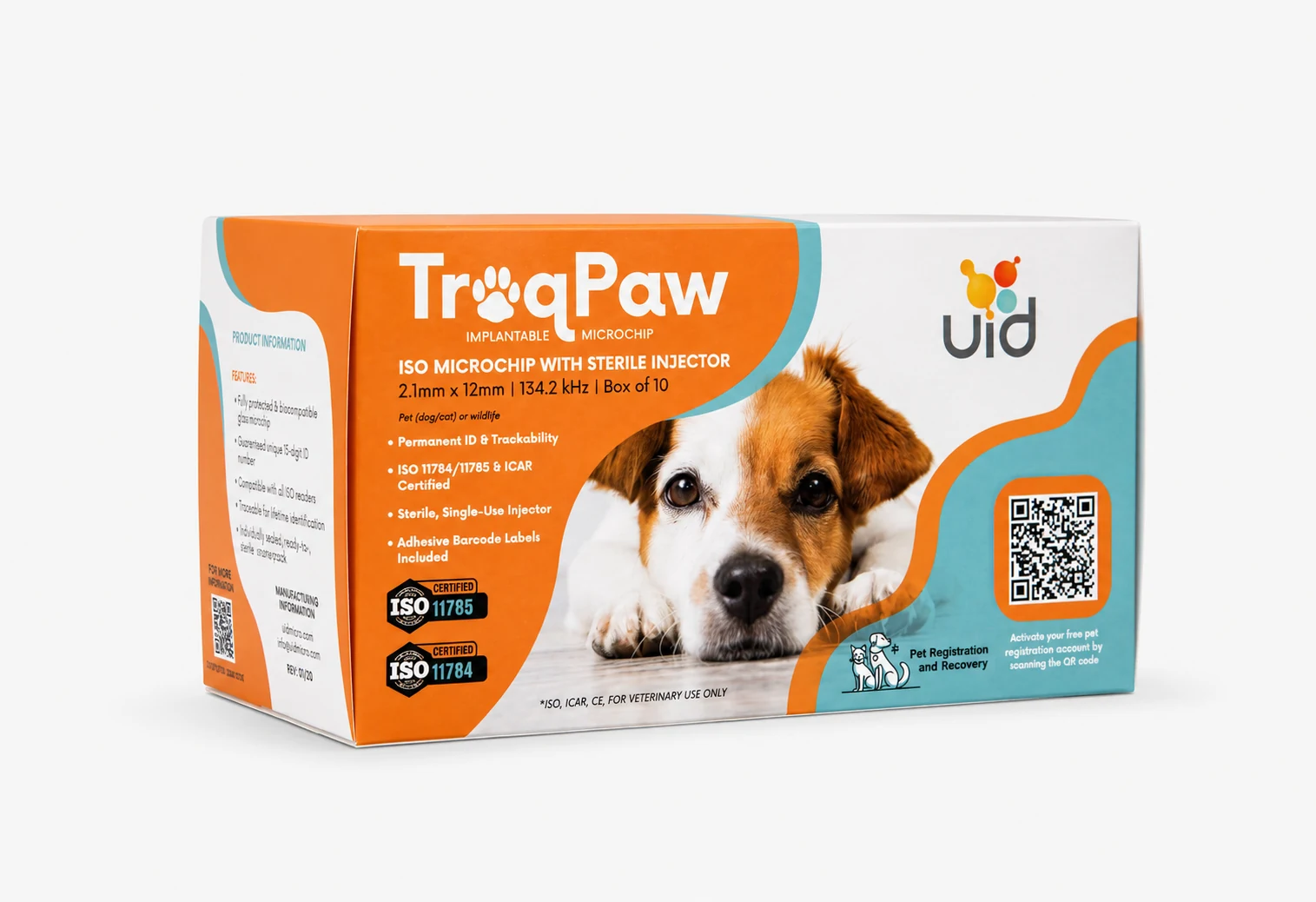
TraqPaw chip numbers are associated with the purchasing clinic through Pet Registration and Recovery (PRR) before UID ships them. Once implanted, the clinic updates their record and provides the owner with registration instructions. After that, the owner completes their pet and contact details with PRR.
- Clinic association: A way back to your practice if the owner forgets to register.
- Owner registration: A separate step, using the included registration card.
- Registry review: Pet Registration and Recovery is part of AAHA's participating registry list. Go to Pet Registration and Recovery for current information on options, costs, and terms.
See the full clinic pre-registration workflow.
Common Questions
-
Which pet microchip registry should our clinic choose?
Choose one whose enrollment, update, and found-pet processes your team can follow and explain. Use the priority table above: confirm found-pet support, AAHA lookup participation, operating history, and fees first, then contact updates, closure policy, enrollment, and clinic access. Ask each provider to demonstrate the process before you decide.
-
Is AAHA a pet microchip registry?
No. AAHA's lookup helps identify participating registries to contact. It does not enroll pets, update records, or display owner details. Use the registration check guide to find a registry and confirm the actual record.
-
Must the registry match the microchip brand?
Not necessarily. Ask the registry which chip brands and number formats it accepts. PRR states that it accepts microchips from any brand. Registry acceptance is a separate question from whether a scanner can read the implanted chip.
-
Does clinic pre-registration complete the owner's record?
No. A clinic association identifies the practice. Owner registration adds the pet and contact details. With TraqPaw, the clinic also needs to record the chip number against the right patient so it can help if contacted.
-
Do pet microchip registries charge annual fees?
It depends on the provider and plan. Compare enrollment, renewal, transfer, and optional-service terms. Ask what happens to the record and support access if a paid plan expires; do not assume an add-on and the underlying registration have the same terms.
-
Can owners transfer a microchip registration after adoption?
They should request the transfer through the registry holding the record. Ask about required documents, consent, fees, and review before advising an owner. PRR's terms require documentation and make approval subject to its review.
-
Can our clinic access or export registry records?
Ask the provider; access and export options need confirmation. Request its policy on staff permissions, owner consent, available fields, file formats, and leaving the service. Keep the chip number and registration details in your patient record according to your practice's record procedures.
-
What if a pet microchip registry closes?
Confirm where its records will go and how owners can maintain registration. Ask the provider about notification, access, and transfer arrangements. If a new registry is needed, confirm its enrollment requirements for the existing chip number and save the new registration details.
Common Pet Microchip Terms
Keep the Registry Instructions Close
For your team: AAHA's lookup and participating registries explain how to find the registry holding a record. Its lookup FAQs explain what results can show.
For reader compatibility: The ISO pet microchip guide covers chip standards and scanner compatibility.
For the chip and registry distinction: AAHA's pet microchipping FAQs explains separation of pet microchip and registration.
For pet owners: Share the pet microchip registration guide and registration check guide.
For TraqPaw: Compare pet microchips for your practice.
Updated September 14, 2026. This guide is intended for U.S. veterinary practices. Confirm provider details when you choose or review a service.
Choosing Microchips and Registration for Your Practice?
Tell us how your team handles enrollment and owner instructions. We can walk through TraqPaw's clinic association, registration materials, and the questions to put to the registry.