
Choosing Veterinary Controlled Drug Log Software
Compare paper logs, electronic logbooks, and cabinet-based tracking, with practical questions for record capture, reconciliation, and product demos.
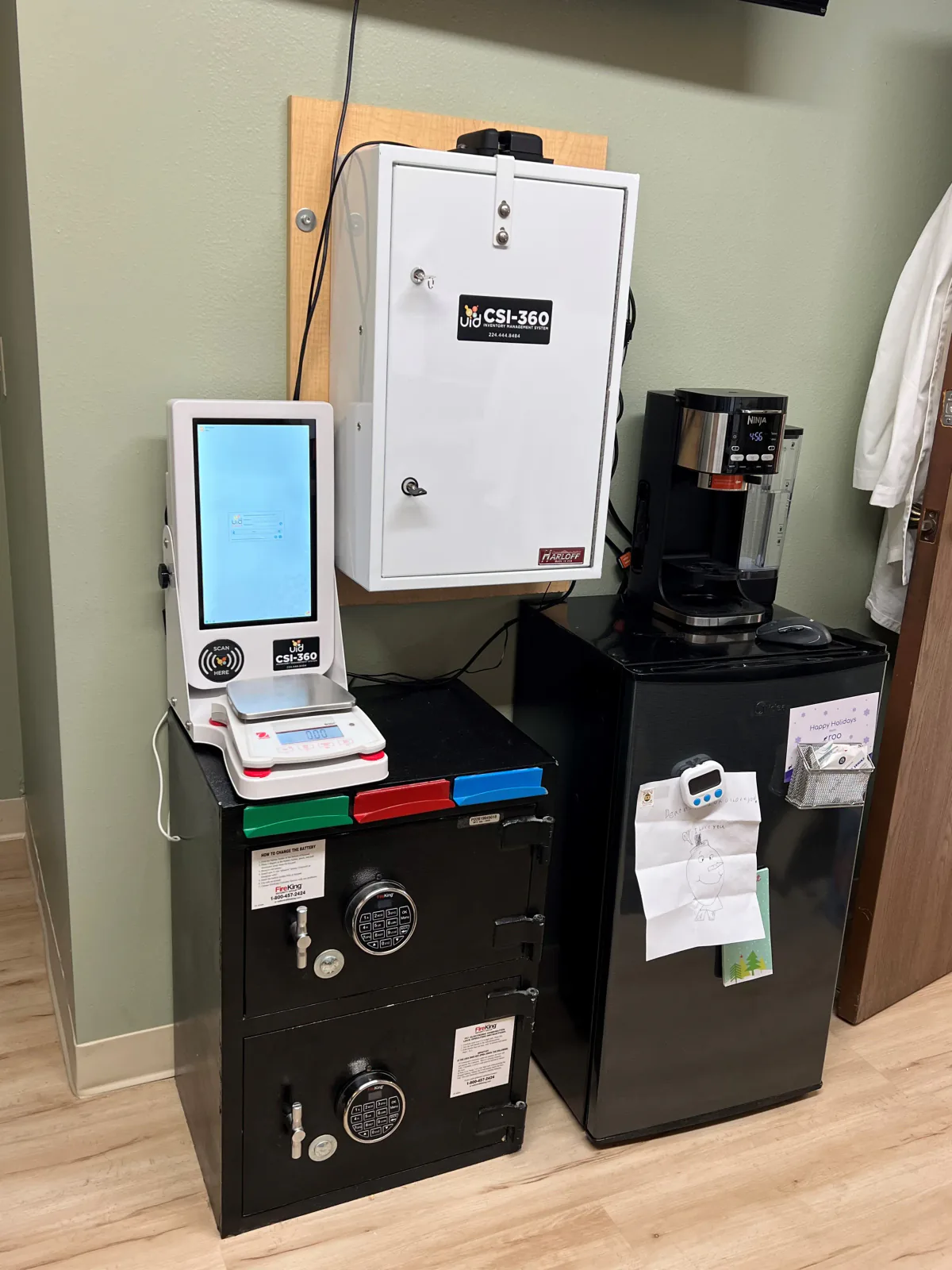
Learn more →CSI-360 secures the cabinet, weighs each dispense, connects it to a staff member and patient, and saves the transaction immediately. Reconciliation and inspection prep start with a current record instead of a paper trail.
A handwritten log captures what someone enters, and the syringe reading supplies the number. Neither step measures the change in the vial, so small differences can accumulate even when the team follows its process.
CSI-360 uses two-part authentication to control the electronic lock. Each cabinet entry is captured electronically.
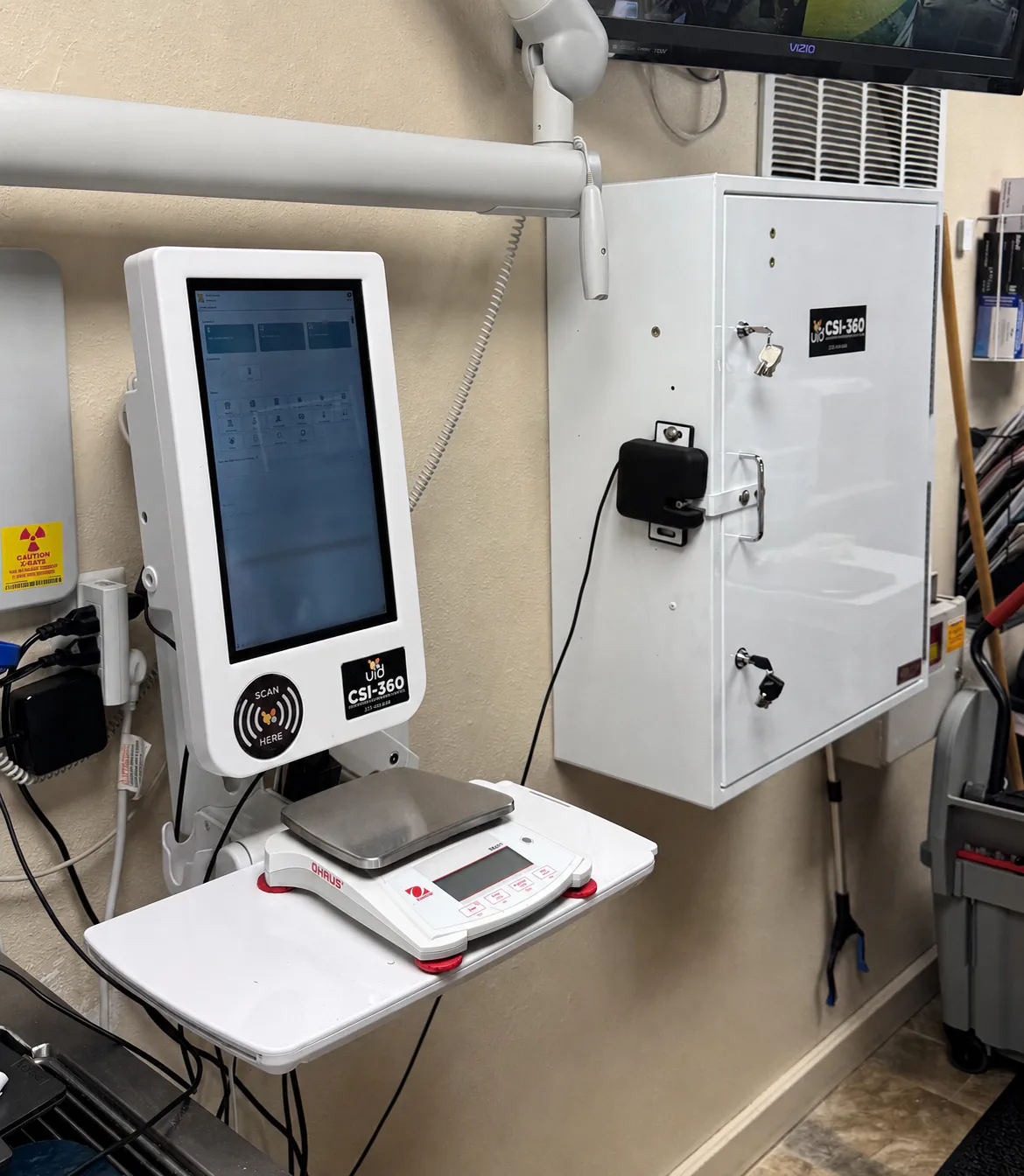
Each drug vial or tracked item has its own RFID label. Scanning it identifies the item being checked out or returned.
The user weighs the vial or manually enters the amount used. CSI-360 records the in-and-out quantity, volume on hand, and disposition.
Inventory, individual drug use, user access, and cabinet-entry reports are available in the system.
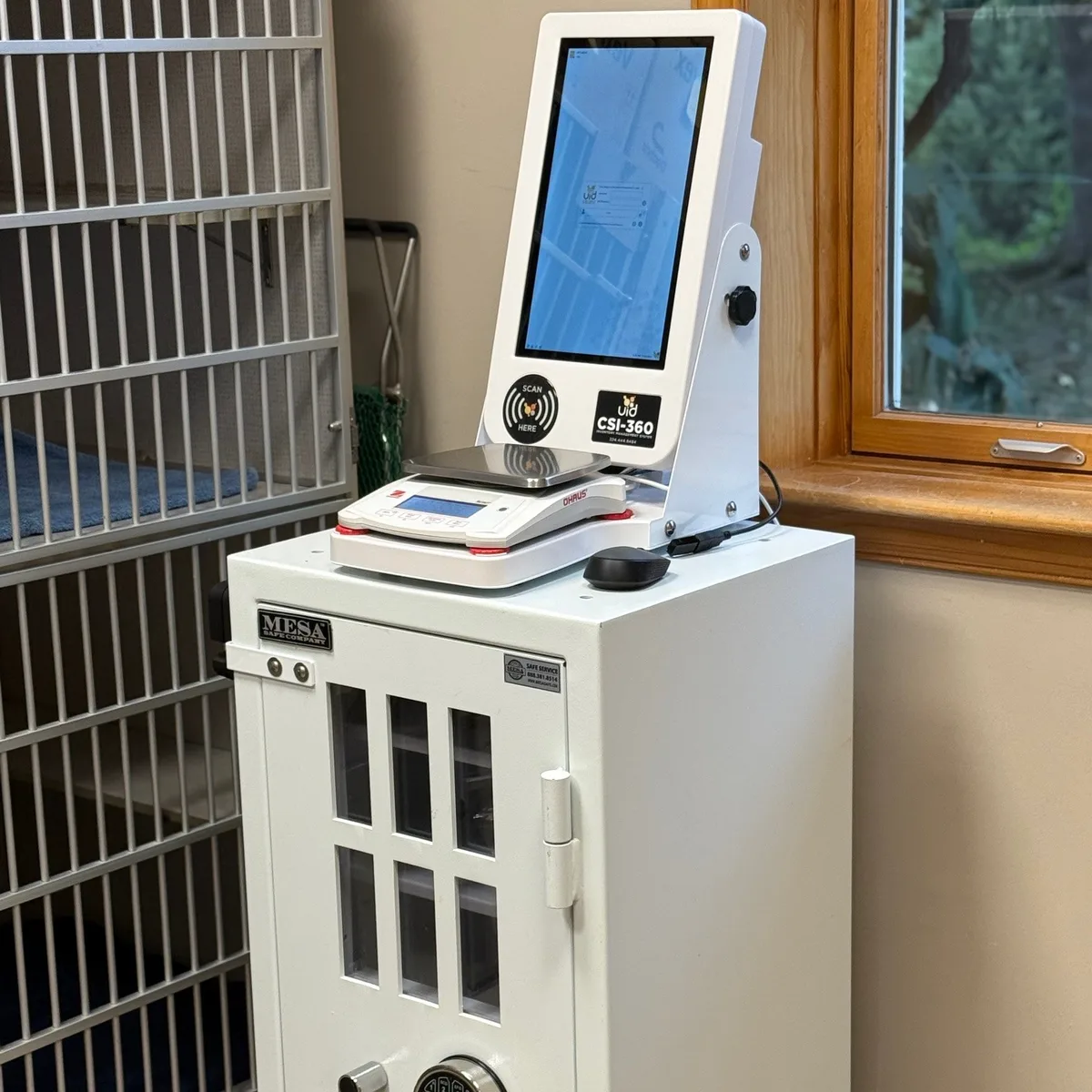
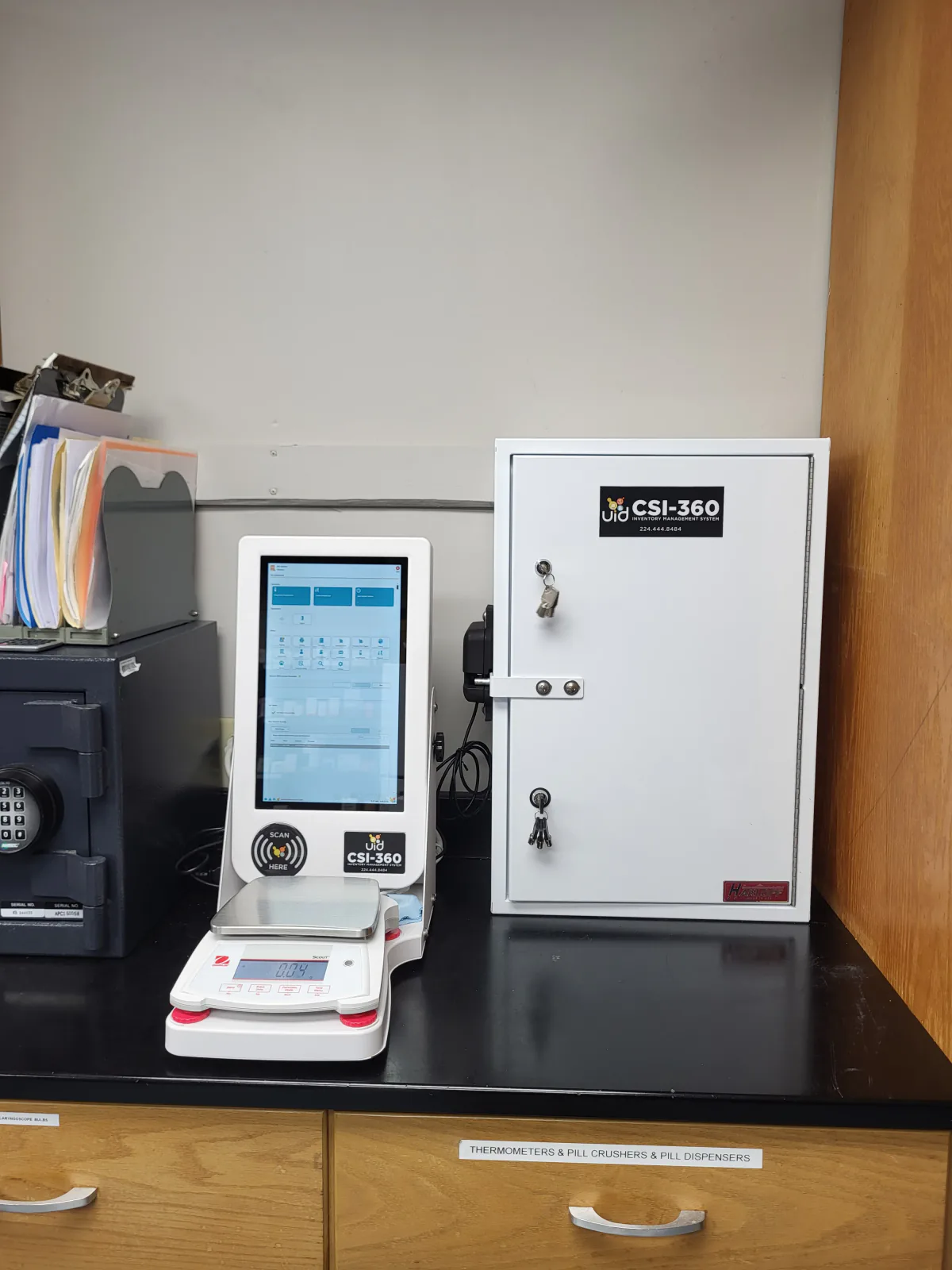
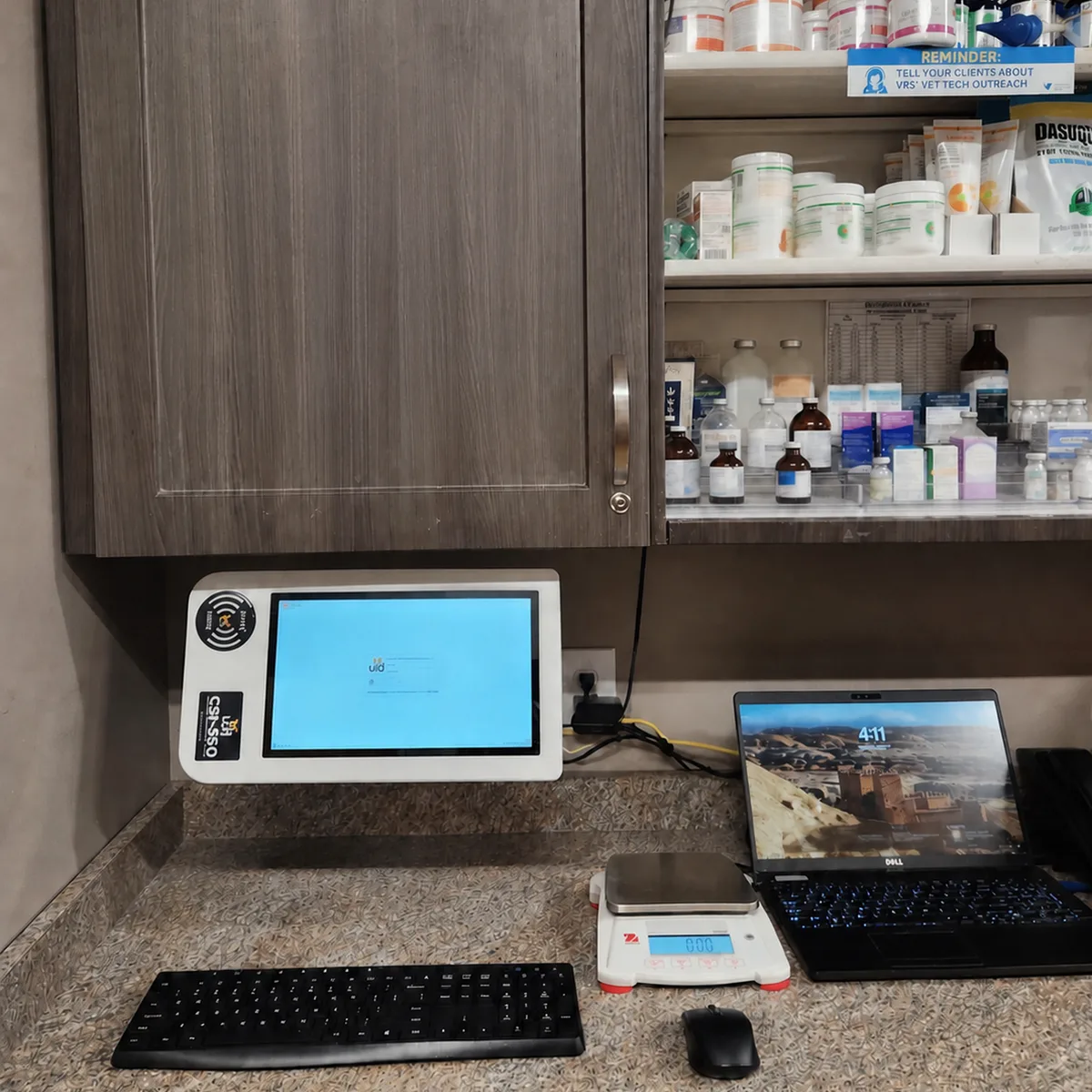
CSI-360 Desk Mount Retrofit onto an Existing Safe
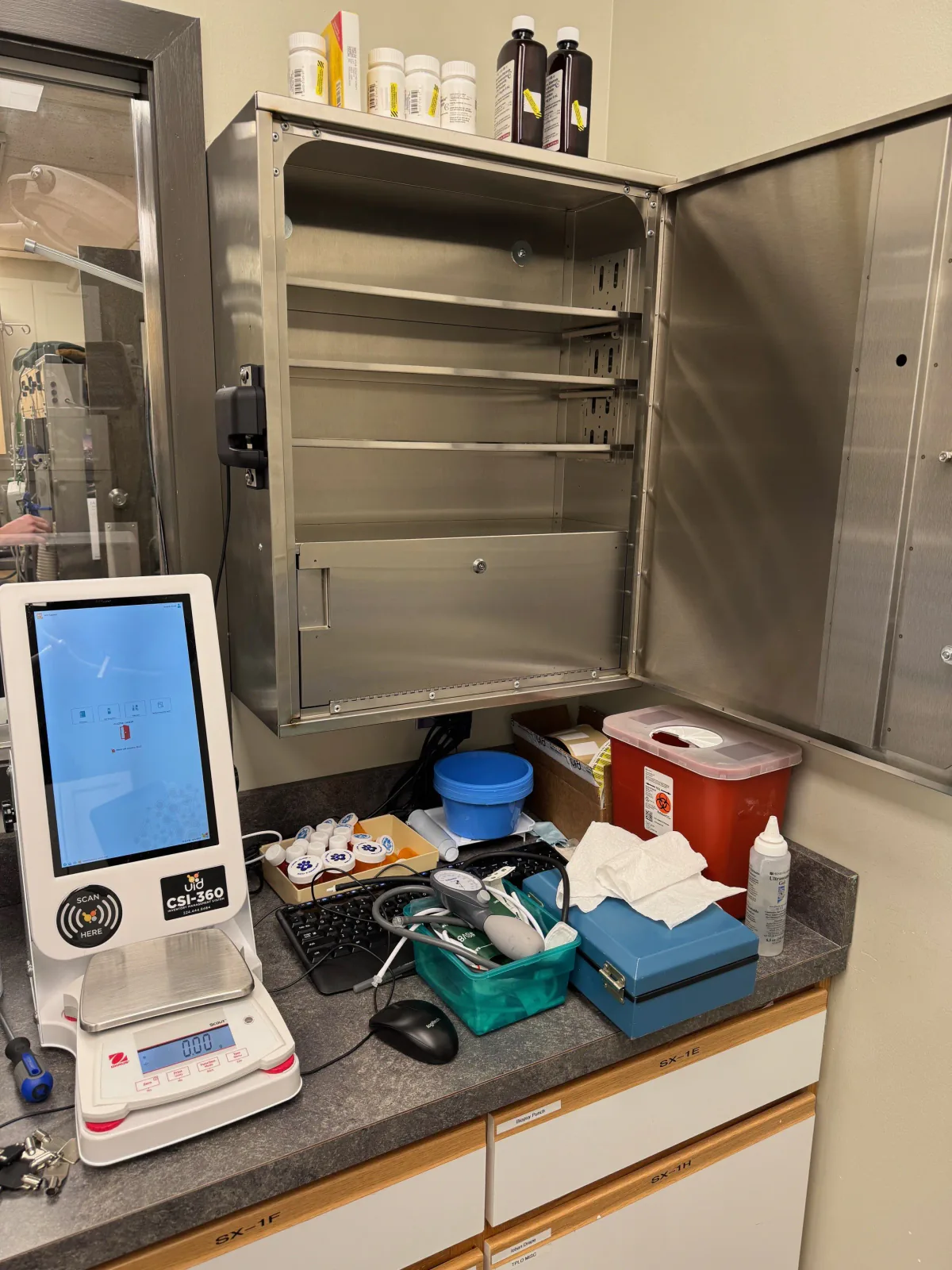
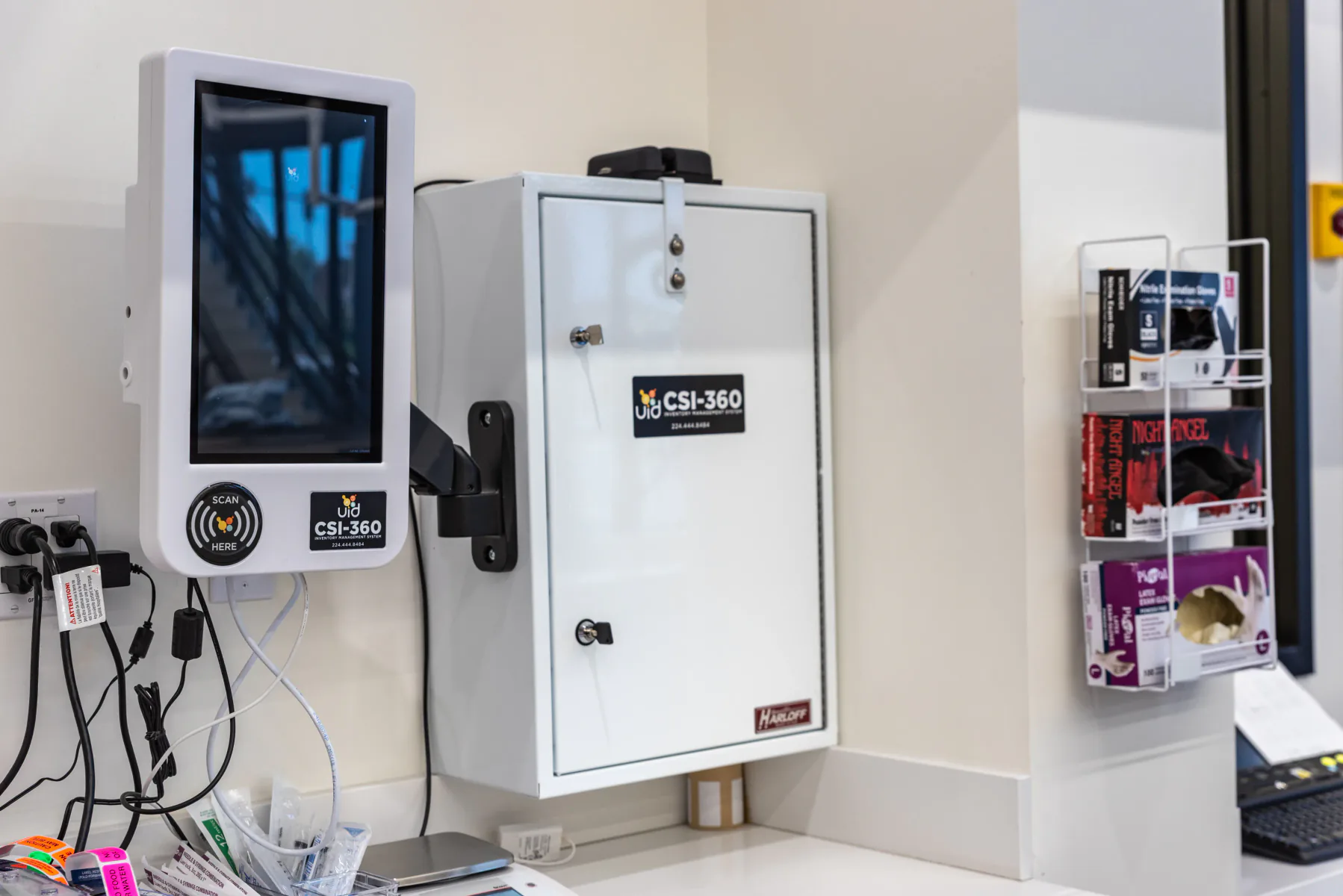
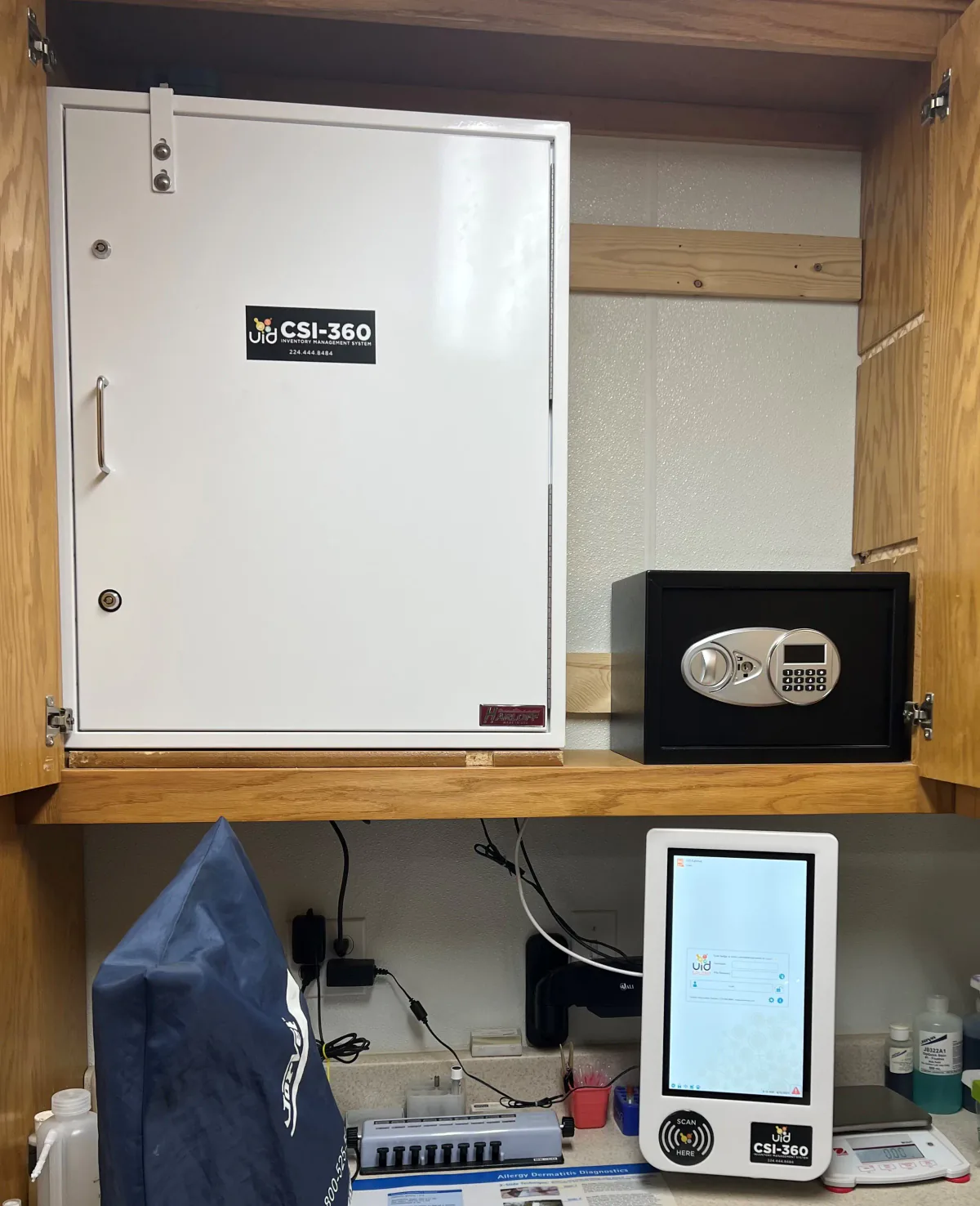
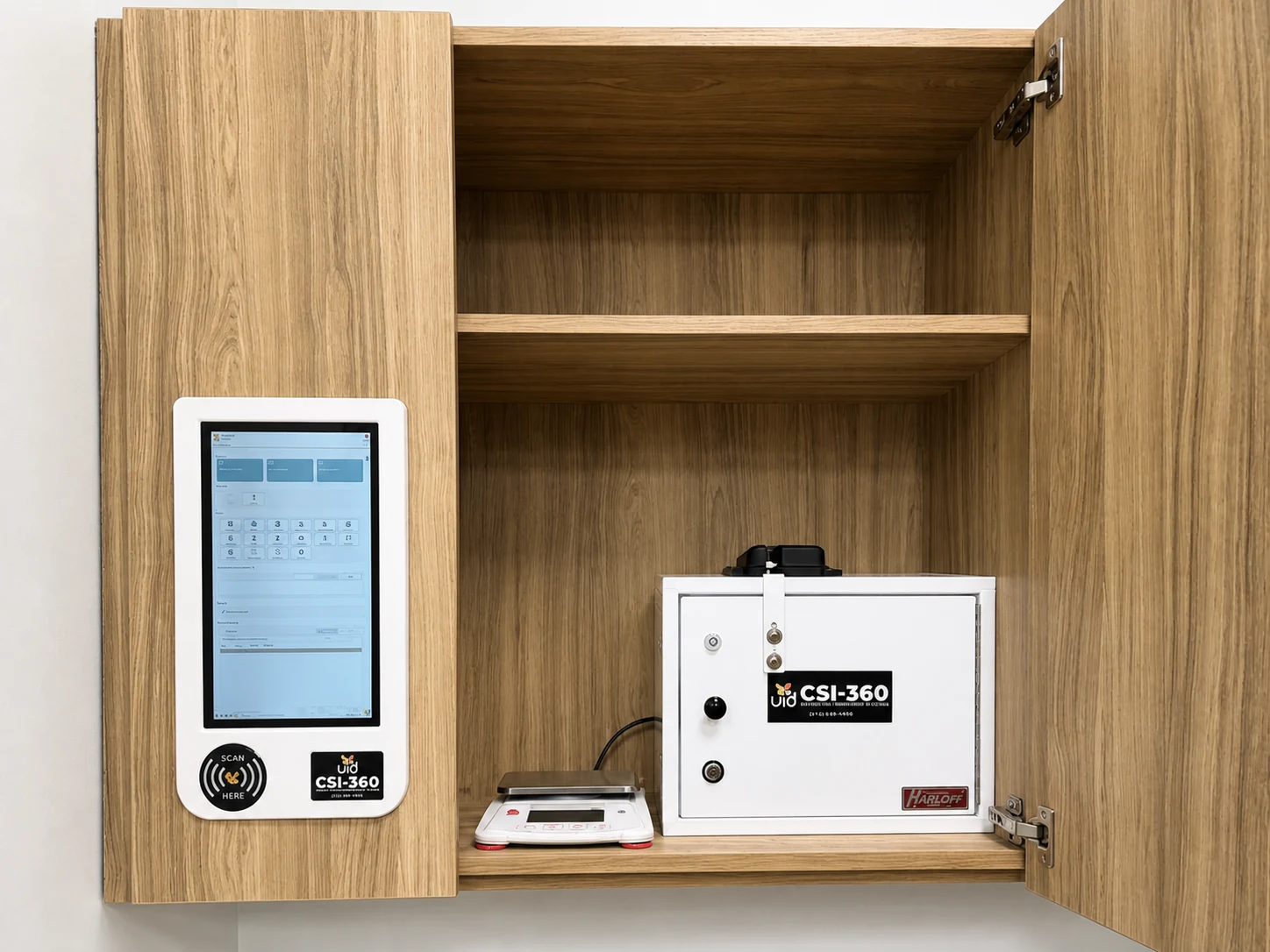
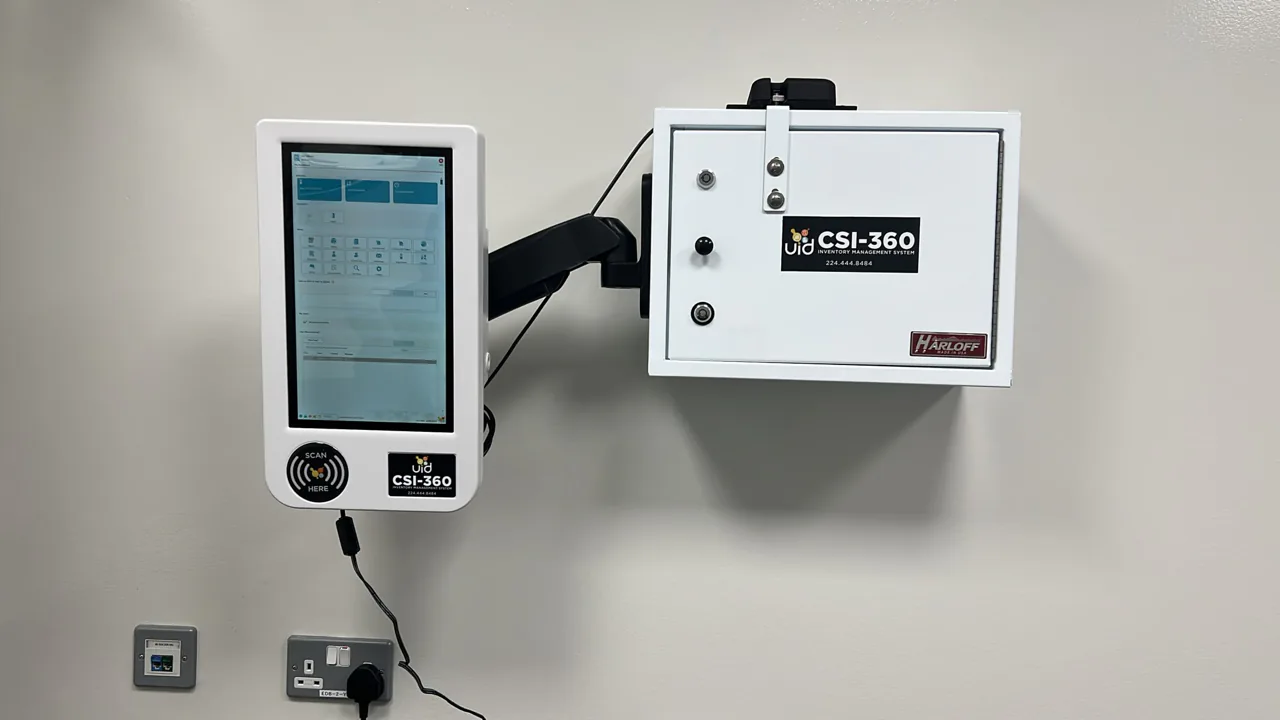
CSI-360 combines electronic access, RFID item identification, a digital scale, and touch-screen software at the cabinet. It can be added to most DEA-compliant storage or supplied as a complete system.
CSI-360 is flexible by design. Cabinets, kiosks, and workflows can be customized to match how your practice actually functions.
A simple arm-mounted kiosk and flexible locking options retrofit to the storage already in your van or truck. Run one mobile cabinet as a standalone system, or connect mobile and brick-and-mortar locations with available cloud options.
Keep in-clinic and on-farm controlled-substance activity connected, with cabinet and scale options sized for ambulatory workflows and larger containers.
When a patient needs medicine now, the cabinet opens now — no data entry into the PIMS before you can dispense. The record of user, item, amount, and time is captured at the cabinet as you work.
Precision scale options measure down to ±0.001 mL — built for the very small quantities common in avian, reptile, and small-mammal care.
Enter five details about your practice to estimate annual logging time and labor cost. The assumptions appear beside the inputs, and the results update as you type.
Estimates only. Labor cost is wage multiplied by time and does not include overhead or benefits. Added visits show potential capacity, not booked revenue. CSI-360 automates the cabinet-side dispensing record; your practice remains responsible for DEA forms, witnessed waste, the biennial inventory, and its SOPs.
No. CSI-360 automates the cabinet-side dispensing record: who handled the item, what was used, how much, and when. Your practice still manages receiving records, witnessed waste, physical inventories, SOPs, and any required DEA reports.
The registered practice is responsible. CSI-360 supports that work with controlled access, measured transactions, and reports on demand, but a cabinet or software system does not take the place of your procedures.
CSI-360 reads patient records from Shepherd, Vetspire, Digitail, and more, so staff select the patient at the cabinet instead of retyping the case. The dispense is stored in CSI-360 for controlled-substance reporting. If you use another PIMS, ask us to confirm the integration path.
Usually. CSI-360 works with most DEA-compliant cabinets, safes, refrigerators, and freezers. Tell us the make and model, and we will confirm the fit. A complete cabinet or safe is also available.
CSI-360 replaces shared-key access and handwritten entries with individual sign-in, RFID-identified items, and weighed transactions. Multi User Authentication can also require two approved users before the cabinet opens.
The CSI-360 product page has the full specifications, installation options, ordering information, and available support plans.
Review the records an inspector may request and set up a practical self-audit routine.
Learn the warning signs in inventory records and the steps to take after suspected theft or loss.
See how partial-dose readings create variance and why weighing the container produces a clearer record.
Use these guides to prepare the questions that matter to your practice.
Compare paper logs, electronic logbooks, and cabinet-based tracking, with practical questions for record capture, reconciliation, and product demos.
Learn more →Explore supported Shepherd, Vetspire, and Digitail patient lookup, the cabinet record, and the setup questions to discuss with UID.
Tell us what you store, the cabinet or safe you use, and your PIMS. We'll help you confirm the fit and plan the next step.